English/Spanish blog from somewhere in La Mancha / Blog en inglés y español de un lugar de La Mancha

Welcome / Bienvenidos

Thanks for visiting us.
Gracias por visitarnos.
Powered By Blogger

Blog Archive

Friday, 1 May 2015

Exercises Irregular Verbs Past Simple / Ejercicios Pasado Simple Verbos Irregulares

PRACTICE THE PAST TENSE OF IRREGULAR VERBS

I - WRITE THE MEANING OF THESE WORDS IN SPANISH:

1. give ___________  2. bite ____________ 3. bet ______________
4. lay ____________  5. lead ____________ 6. forget ___________
7. believe _________  8. hear ___________   9. wear ____________
10. stand _________  11. sit ____________ 12.  shoot ___________
13. think _________   14. tear ___________ 15. hit ______________
16. sink __________  17. feed ___________18. tell______________
19. sweep ________  20. lend ___________ 21. fall _____________
22. fly ___________   23. beat ___________ 24. stick ____________


II - FILL IN THE BLANKS WITH THE PAST FORM OF THESE VERBS:

1. Peter __________ (swim) very well.
2. Mary __________(buy) a blue dress.
3. Patricia _________(think) I was you.
4. Sylvia _________(dream) of her family.
5. I _________ (cut) some flowers.
6. She __________(give) me a gift for my birthday.
7. He _________(tear) the papers.
8. It _________(begin) to rain.
9. They _________(keep) the money in the bank.
10. We __________(fight) with our neighbours.
11. My dog __________(bite) the bad man.
12. Eliza ___________ (eat) spaghetti.
13. Fred ___________(sell) his old car.
14. She ___________(wear) a red coat.
15. Mr. Philips __________ (forget) to buy orange juice.
16. She ___________(lend) Tom money.
17. Margery __________ (feed) the cat.
18. The Titanic ___________ (sink) in the ocean.
19. The policeman __________ (shoot) the criminal with his gun.
20. We __________ (hear) the news on TV.

III – FILL IN THE BLANKS WITH THE NEGATIVE OF THE PAST SIMPLE OF THESE IRREGULAR VERBS:

1. Peter ______________ (not buy) a new motorcycle.
2. Margaret ____________(not forget) to visit her grandma.
3. We ________________ (not eat) at a Japanese restaurant.
4. The dog ____________(not bite) the children.
5. The house ___________ (not fall) down.
6. John ___________ (not swim) in the river.

IV - WRITE QUESTIONS FOR THESE ANSWERS:

1.
Yes, I saw Elizabeth yesterday.

2.
No, I drove a green car last night.

3.
Yes, I slept at my friend’s house last night.

4.
Yes, Peter built our house.

5.
No, the chilren didn´t swim in our pool.

6.
Paul wrote a letter to Anne.

7.
Elizabeth swept the floor.

8.
Alfred made the beds.

9.
Pansy taught French.

10.
Peter ran to the bus station.

11.
Elsa went to Chicago.

12.
They had a party on Friday evening.


V - FURTHER PRACTICE PAST TENSE OF IRREGULAR VERBS

  1. Elizabeth ____________ (fly) to London yesterday afternoon.
  2. We ___________ (buy) many things at the shopping center.
  3. Arthur ___________ (hide) the money under a tree.
  4. The neighbours ___________ (make) a lot of noise last night.
  5. Sandra __________(fight) with her best friend.
  6. George __________ (give) his mother flowers for Mother’s Day.
  7. Arnold __________ (sell) his CDs to Peter.
  8. Why did the Titanic _____________ (sink)?
  9. Who ___________ (shoot) President Kennedy?
  10. Our guide ___________ (lead) us to the Prado Museum.
  11.  Martha ______________(not keep) the books in her schoolbag.
  12.  Edward _____________(forget) it was Sunday.
  13.  Hilary ______________(not see) the car accident.
  14. Did you ____________(hear) the story about Dick´s cat?
  15. Where did they ___________ (swim) this morning?
  16. Pamela __________ (tear) her dress.
  17.  Mary ____________(not wear) the green jacket.
  18.  Patrick ____________(understand) the lesson well.
  19.  Ricky _____________ (find) a pirate´s treasure.
  20.  Anton ____________(speak) five languages.
  21. Pilar ___________(not eat) sushi.
  22.  Did Alex ___________(drive) your car?
  23.  I _____________(think) Portugal was in Asia.
  24. What did Mrs. Peters _________ (teach)?
  25.  The pyromaniac ___________ (burn) a forest.
  26.  Who  ___________ (run) to Marathon?
  27.  Georgina __________ (tell) her little sister a beautiful story.
  28. Mark _____________(come) to see us.
  29.  The children ___________(not go) to the park today.
  30.  Who __________ (win) the football match?
  31.  Why did you ___________(write) to Emily?
  32.  Who ___________(write) that novel?
  33.  Susan ____________(not read) your letter.
  34. Madeleine ____________ (cut) her finger with a knife.
  35. Your team ___________(not beat) our team last week.
  36. Bertie _____________(not hit) his brother.
  37. Randolph __________ (eat) a lot of peanuts.
  38. The people ____________(become) quiet.
  39. What did Margery __________ (make) for you to eat?
  40. Did  Margery__________ (make) muffins?                                                                          
  41.  Who __________(make) muffins?                                                                                  
  42. They __________ (stick) the parts together with glue. (con pegamento)                       
  43. He ___________(bet) money on a horse.                                                                            
  44. She ___________(shake) Mrs. Wright’s hand.                                                                   
  45. Manuel __________ (take) his dog to school with him.

ANSWERS / RESPUESTAS : Exercises Irregular Verbs Past Simple / Ejercicios Pasado Simple Verbos Irregulares

PRACTICE THE PAST TENSE OF IRREGULAR VERBS

I - WRITE THE MEANING OF THESE WORDS IN SPANISH:

 1. give - dar  2. bite - morder 3. bet - apostar

4. lay - poner  5. lead - liderar 6. forget - olvidar

7. believe - creer  8. hear - oír   9.wear- vestir, llevar puesto

10. stand - estar o ponerse de pie  11. sit - sentarse 12. shoot - disparar

13. think - pensar   14. tear - rasgar 15. hit -golpear

16. sink - hundir  17. feed - alimentar18. tell - decir

19. sweep - barrer  20. lend - prestar 21. fall - caer

22. fly - volar   23. beat - apalear, batir 24. stick – pegar (por ejemplo con pegamento)


II - FILL IN THE BLANKS WITH THE PAST FORM OF THESE VERBS: 

1. Peter swam (swim) very well.

2. Mary bought (buy) a blue dress.

3. Patricia thought (think) I was you.

4. Sylvia dreamt / dreamed (dream) of her family.

5. I cut  (cut) some flowers.

6. She gave (give) me a gift for my birthday.

7. He tore (tear) the papers.

8. It began (begin) to rain.

9. They kept (keep) the money in the bank.

10. We fought (fight) with our neighbours.

11. My dog bit (bite) the bad man.

12. Eliza ate (eat) spaghetti.

13. Fred sold (sell) his old car.

14. She wore (wear) a red coat.

15. Mr. Philips forgot (forget) to buy orange juice.

16. She lent (lend) Tom money.

17. Margery fed (feed) the cat.

18. The Titanic sank (sink) in the ocean.

19. The policeman shot (shoot) the criminal with his gun.

20. We heard (hear) the news on TV.


III – FILL IN THE BLANKS WITH THE NEGATIVE OF THE PAST SIMPLE OF THESE IRREGULAR VERBS:

1. Peter didn’t buy (not buy) a new motorcycle.

2. Margaret didn’t forget (not forget) to visit her grandma.

3. We didn’t eat (not eat) at a Japanese restaurant.

4. The dog didn’t bite (not bite) the children.

5. The house didn’t fall (not fall) down.

6. John didn’t swim (not swim) in the river.


IV - WRITE QUESTIONS FOR THESE ANSWERS:

1.    1.  Did you see Elizabeth yesterday?

Yes, I saw Elizabeth yesterday.

2.    2.  Did you drive a red car last night?

No, I drove a green car last night.

3.    3.  Did you sleep at your friend’s house last night?

Yes, I slept at my friend’s house last night.

4.    4.  Did Peter build your house?

Yes, Peter built our house.

5.    5.  Did the children swim in your pool?

No, the chilren didn´t swim in our pool.

6.    6. Who wrote a letter to Anne?

Paul wrote a letter to Anne.

7.   7.  What did Elizabeth sweep?

Elizabeth swept the floor. 

8.    8. Who made the beds?

Alfred made the beds. 

9.   9.  What did Pansy teach?

Pansy taught French.

1 10. . What did Peter do?

Peter ran to the bus station.

1111.  Where did Elsa go?

Elsa went to Chicago.

1112.  When did they have a party?

They had a party on Friday evening.


V - FURTHER PRACTICE PAST TENSE OF IRREGULAR VERBS

  1. Elizabeth flew (fly) to London yesterday afternoon.
  2. We bought (buy) many things at the shopping center.
  3. Arthur hid (hide) the money under a tree.
  4. The neighbours made (make) a lot of noise last night.
  5. Sandra fought (fight) with her best friend.
  6. George gave (give) his mother flowers for Mother’s Day.
  7. Arnold sold (sell) his CDs to Peter.
  8. Why did the Titanic sink (sink)?
  9. Who shot (shoot) President Kennedy?
  10. Our guide led (lead) us to the Prado Museum.
  11.  Martha didn’t keep (not keep) the books in her schoolbag.
  12.  Edward forgot (forget) it was Sunday.
  13.  Hilary didn’t see (not see) the car accident.
  14. Did you hear (hear) the story about Dick´s cat?
  15. Where did they swim (swim) this morning?
  16. Pamela tore (tear) her dress.
  17.  Mary didn’t wear (not wear) the green jacket.
  18.  Patrick didn’t understand (understand) the lesson well.
  19.  Ricky found  (find) a pirate´s treasure.
  20.  Anton spoke (speak) five languages.
  21. Pilar didn’t eat (not eat) sushi.
  22.  Did Alex drive (drive) your car?
  23.  I thought (think) Portugal was in Asia.
  24. What did Mrs. Peters teach (teach)?
  25.  The pyromaniac burnt (burn) a forest.
  26.  Who  ran (run) to Marathon?
  27.  Georgina told  (tell) her little sister a beautiful story.
  28. Mark came (come) to see us.
  29.  The children didn’t go (not go) to the park today.
  30.  Who won (win) the football match?
  31.  Why did you write (write) to Emily?
  32.  Who wrote (write) that novel?
  33.  Susan didn’t read (not read) your letter.
  34. Madeleine cut (cut) her finger with a knife.
  35. Your team didn’t beat (not beat) our team last week.
  36. Bertie didn’t hit (not hit) his brother.
  37. Randolph didn’t eat (eat) a lot of peanuts.
  38. The people became (become) quiet.
  39. What did Margery make (make) for you to eat?
  40. Did  Margery make (make) muffins?                                                                          
  41.  Who made (made muffins?                                                                                  
  42. They stuck (stick) the parts together with glue. (con pegamento)                       
  43. He bet (bet) money on a horse.                                                                            
  44. She shook (shake) Mrs. Wright’s hand.                                                                   
  45. Manuel took (take) his dog to school with him.

Tuesday, 21 April 2015

Yellow ribbon / Cinta amarilla

Beribboning trees is an ancient practice, especially when it´s time for a festival. But there are other reasons to tie ribbons to trees. 

Engalanar árboles con cintas es una práctica muy, muy, antigua, sobre todo en épocas festivas. Pero hay otras razones para atar cintas a los árboles.

Happy Arbor Day!

¡Feliz día del árbol!


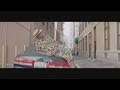
Above, the music. Next, the lyrics and their meaning in Spanish. Below that, a sing along. Your turn.

Arriba, la música. A continuación, la letra y su significado en español. Debajo de eso, un canta conmigo. Ahora te toca a ti.  

TIE A YELLOW RIBBON / ATA UNA CINTA AMARILLA

I’m coming home, I’ve done my time. (Vuelo a casa, he cumplido mi condena.)
Now I’ve got to know what is and isn’t mine. (Ahora tengo que saber lo que es y lo que no es mío.)
If you received my letter telling you I’d soon be free, (Si has recibido la carta en la que te digo que pronto seré libre,)
Then you know just what to do if you still want me. (Entonces ya sabes lo que tienes que hacer si todavía me quieres.)
If you still want me. (Si todavía me quieres)

Go tie a yellow ribbon round the old oak tree. (Ata una cinta amarilla alrededor del viejo roble.)
It’s been three long years. (Han pasado tres largos años.)
Do you still want me? (¿Todavía me sigues queriendo?)
If I don’t see a ribbon round the old oak tree, (Si no veo una cinta alrededor del viejo roble,)
I’ll stay on the bus, forget about us, and put the blame on me, (Me quedaré en el autobús, me olvidaré de lo nuestro, y sólo me culparé a mí mismo,)
If I don´t see a yellow ribbon round the old oak tree. (Si no veo una cinta amarilla alrededor del viejo roble.)

Bus driver, please, look for me (Sr. Conductor, por favor, mire por mí)
‘Cause I couldn’t bear to see what I might see. (Porque no podría soportar ver lo que podría no ver.)
I´m really still in prison and my love, she holds the key: (En realidad sigo en prisión y mi amor tiene la llave y)
A single yellow ribbon’s what I need to set me free. (Una sola cinta amarilla es lo que necesito para ser libre.)
I wrote and told her, “Please, (La he escrito diciendo, "Por favor,)
Go tie a yellow ribbon round the old oak tree. (Ve y ata una cinta amarilla alrededor del viejo roble.)
It’s been three long years, (Han pasado tres largos años,)
Do you still want me? (¿Me sigues queriendo?)
If I don’t see a ribbon round the old oak tree, (Si no veo una cinta alrededor del viejo roble,)
I’ll stay on the bus, forget about us, and put the blame on me, (Me quedaré en el autobús, me olvidaré de lo nuestro y solo me culparé a mi mismo,)
If I don´t see a yellow ribbon round the old, old oak tree.” (Si no veo una cinta amarilla alrededor del viejo, viejo, roble.")

Now the whole demmed bus is cheering (Ahora todo el dichoso autobús esta aplaudiendo)
And I can´t believe I see (Y no puedo creer lo que estoy viendo)
A hundred yellow ribbons round the old, old oak tree. (Cien cintas amarillas alrededor del viejo, viejo roble.)

Monday, 6 April 2015

Abridged Appointment With Love / Breve versión de una cita con el amor


We recently published a very short version of a story about an appointment with death. Today we publish an abridged version of a short story about an appointment with love. 

Hace poco publicamos un cuento sobre una cita con la muerte. Hoy publicamos una versión que hemos reducido de un cuento corto sobre una cita con el amor. 

Appointment With Love

Seven o´clock sharp at the train station. He would recognize her by the red rose she would wear in the buttonhole of her coat.
It had all begun long before, when he had read a book donated to the army library. There were notes written on it by someone who was thoughtful and had true insight.
There was also a name in the book. And in the phone book, there was an address for that name. He was shy to call, but he wrote to her.
Thus began an exchange of letters between them that had already lasted for over a year and that he believed had been what had kept him alive during the war. He knew her heart, but he did not know her face. She hadn’t sent him a photograph because she believed that if he really cared, it wouldn’t matter what she looked like.
Seven o´clock sharp. A gorgeous young woman came walking up to him. She smiled and murmurred, “Coming my way, soldier?”
It was then he saw the red rose. It was in the buttonhole of  the coat of a rather plain lady who was much older than he was. She was smiling at him over the young beauty’s shoulder.
And he chose. It would be friendship and not love, but he had to stay. He owed it to her.
“I have no idea what all this is about,” said the middle-aged lady when he greeted her, “but the young woman that has just passed by is waiting for you in the cafeteria. She wants you to put this rose in the buttonhole of her coat yourself.”
 
Cita con el amor

Las siete en punto en la estación de tren. La reconocería por la rosa roja que ella llevaría en el ojal de su abrigo.
Esto había empezado mucho antes, cuando él había leído un libro donado a la biblioteca del ejército. Alguien había escrito a mano comentarios sobre aquel relato. Alguien con una gran sensibilidad.
Había un nombre en la solapa del libro. Y en la guía de teléfonos había una dirección para ese nombre. Le daba corte llamar, así que él la escribió.
Así comenzó una correspondencia por escrito que había durado ya un año. Estaba convencido de que si no había muerto en la guerra era por su relación con esa mujer, cuyo corazón conocía pero cuyo rostro jamás había visto. No había querido mandarle una fotografía. Decía que si realmente le interesaba, su aspecto no podía importar.
Las siete en punto. Una mujer imponente vino caminando hacia él. Le sonrió y susurró al pasar, “¿Vas en la misma dirección, soldado?”
Entonces fue cuando vio la rosa roja. Estaba en el ojal del abrigo de una mujer  mucho mayor que él y de aspecto muy corriente que le sonreía por encima del hombro de la belleza.
Y eligió. Sería amistad y no amor, pero eso era lo que tenía que hacer. Se lo debía.
“No sé de qué va esto,” dijo la señora sonriendo cuando él la saludo, “pero la señorita que acaba de pasar de largo le está esperando en la cafetería. Quiere que usted mismo ponga esta rosa en el ojal de su abrigo.” 

Find words in the text that mean: 
1. given                                            
2. pensive
3. intuitive understanding
4. gone on
5. was interested
6. very good-looking
7. common, ordinary
8. selected
9. had a debt to pay
10. saluted

We found the picture of the rose in Images from the Internet.
Encontramos la foto de la rosa en Imágenes de Internet.

Friday, 3 April 2015

The Legend of St. Columba and the White Horse / La leyenda de San Columba y el caballo blanco


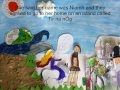
Because it was Easter, St. Columba decided to visit some monks that were friends of his, although he was old and felt very weak. He was unable to go on foot or to ride his beloved white horse, but had to be taken there in a cart. On his way back, his white horse approached him, aware that the saint would pass away that night. One of the saint’s companions tried to drive the horse away, but St. Columba, who also knew that his time had come and that the horse was there to say goodbye, did not allow this. The horse let its tears fall on the saint’s breast and the saint blessed it. At midnight, the saint left this world and entered heaven.That is the subject of this painting by Scottish artist John Duncan. 

Con motivo de las celebraciones de la Pascua Florida, San Columba, a pesar de que  era anciano y se encontraba muy débil, decidió visitar a unos monjes amigos suyos. No pudo ir ni a pie ni montado en su  amado caballo blanco, por lo mal que se encontraba. Tuvieron que llevarle en una carreta. Cuando volvía de esta salida, su caballo blanco se le acercó, consciente de que el monje moriría esa noche. Un acompañante del santo quiso ahuyentar al caballo, pero San Columba no lo  consintió, ya que él también sabía que había llegado su hora y que el caballo había venido a despedirse. El caballo derramó copiosas lágrimas sobre el pecho del santo, que lo bendijo. A medianoche, el santo dejó este mundo y entró en el cielo. Ese es el tema de este cuadro del pintor escocés John Duncan. 


Saint Columba founded a monastery on the sacred island of Iona in Scotland. That´s a picture of it above.

San Columba fundó  un monasterio en la isla sagrada de Iona en Escocia en el siglo sexto. Eso de arriba es una foto del mismo.    

St. Columba is also the patron saint of bookbinders and we are going to give you an idea why.

San Columba es también el patrón de los encuadernadores de libros y os vamos a dar una idea de por qué. 

The greatest treasure of Ireland is a book that bears St. Columba’s name and on which he himself may have worked, although most authorities believe it is not as old as the sixth century. In any case, it must be the work of monks from St. Columba´s monasteries. This is the Book of Columba or Book of Kells. Below, one of its illustrations.   

El mayor tesoro de Irlanda es un libro que lleva el nombre de San Columba y en el que él pudo haber trabajado, aunque la mayoría de las autoridades piensan que es posterior al siglo sexto. En cualquier caso parece ser obra de monjes de sus monasterios. Se trata del Libro de San Columba, también conocido como el Libro de Kells. Debajo, una de sus ilustraciones.


The four symbols chosen to represent the Evangelists are supposed to be the four noblest animals created. Matthew is the winged man. This symbol represents reason and means one has to be reasonable if one wishes to obtain salvation. The winged lion, symbol of St. Mark, means that Christians have to be brave too. The symbol of Lucas is the winged ox and means that one may have to sacrifice one’s self for the same purpose. Of the eagle, John’s symbol, people believed that it could look straight at the sun while it flew towards it and that is why it represents the ability to concentrate on achieving the high goal of salvation.

Los cuatro símbolos elegidos para representar a los evangelistas se supone que son los cuatro animales más nobles de la creación. Mateo es el hombre alado. Este símbolo significa que para obtener la salvación hay que razonar.  El león alado, símbolo de San Marcos,  significa que el cristiano ha de ser valiente. El símbolo de Lucas es el buey alado y significa que hay que estar dispuesto a sacrificarse. Del águila, símbolo de Juan, se pensaba que podía mirar directamente al sol mientras volaba, y por esto representa la facultad de concentrarse en la más alta de las metas, la salvación.

We found the images that illustrate this post in Images from the Internet. 

Encontramos las imágenes que ilustran esta entrada en Imágenes de Internet.


To illustrate this post we have at hand four pictures coloured many schoolyears ago by pupils who are as anonymous today as the monks of the Book of Columba, also known as the Book of Kells.
Unfortunately we cannot publish them just now because we are scannerless. Although we have two scanners right before our noses, one of them seems to be touched in the head and the other is on a kind of enforced holiday for reasons best known to other electrical appliances hereabout.And they are not telling. Which is also why there were no Toora Chronicles lately.  Etc. Happy Easter anyway!

Para ilustrar esta entrada tenemos a mano cuatro láminas coloreadas hace años por alumnos hoy tan anónimos como los monjes del original. Se trata de los símbolos de los cuatro evangelistas según el Libro de Columba. Desgraciadamente no podemos publicarlos ahora mismo porque carecemos de scanners en este momento. Aunque tenemos dos delante de las narices, uno parece estar tocado del ala y el otro está de algo así como vacaciones forzosas por razones que sólo conocen otros aparatos eléctricos que han estado por aquí. Y no quieren hablar. Por eso tampoco ha habido Crónicas Toora, etc. De todas formas, ¡Feliz Pascua Florida!

Sunday, 15 March 2015

Past Simple / Pasado Simple

Para formar la afirmativa del pasado simple:
- La regla general es que todas las personas acaben en –ed.
Ex. want – wanted, play – played, help – helped
- Para los verbos que terminan en –e, sólo se añade d.
Ex. change – changed, believe – believed, love – loved, date - dated
-Si el verbo termina en una consonante + y, se sustituye la y por una i.
Ex. study – studied, marry – married, carry - carried
- Si el verbo es de una sola sílaba y termina en consonante + vocal + consonante, se dobla la consonante
Ex. stop – stopped, rob – robbed, mob – mobbed,
- Si el verbo tiene más de una sílaba y termina en consonante + vocal + consonante, se dobla la última consonante siempre que esa sílaba esté acentuada. O sea, que el acento caiga en esa sílaba. Si no, no.
Ex. permit – permitted, admit – admitted, prefer – preferred
Hay dos excepciones a esta regla, pero sólo en inglés británico: cancel – cancelled y travel – travelled. O sea, que si no doblas, nada pasa salvo que te corrija alguien que no sepa que se puede no doblar.
- Ojo con w e y porque lo de consonante + vocal + consonante no es razón para doblar si la última consonante es w o y. Por lo tanto, play – played, y mow – mowed. Esas dos letras no se doblan nunca.
- Todas esas normas eran para los verbos regulares. Ahora te toca aprender de memoria el pasado de todos los verbos irregulares. Sí no te he dado una lista, pídemela.

Practice:
1. Lola ____________ (move) to Honolulu last year.
2. Joseph ____________ (burn) all those papers.
3. Sara ____________(study) Italian in Florence.
4. We _____________(visit) the Prado Museum.
5. Peter ____________(hate) spiders.
6. The children ___________(hurry) home.
7. Alfred ___________ (prefer) spicy food to bland food.
8. George __________ (travel) to Miami every winter.
9. We __________ (stay) at an hotel by the sea.
10. Lucy ___________ (marry) three times.
11. Peter ___________ (play) tennis every afternoon.
12. You ____________ (want) to go to the circus.

Para formar la negativa del pasado simple:
Se usa did + not + verbo principal en infinitivo. Sí, para todas las personas. Sí, se puede contraer: didn’t. Y sí, para todos los verbos igual, regulares o irregulares.
Ex. I didn’t go home early. You didn´t eat the vegetables. He didn’t live near our house.
She didn’t believe us. It didn’t stop making noise. We didn’t need friends. You didn´t have a car. They didn’t visit Amsterdam.

Practice:
1. I ______________ (not see) Elizabeth yesterday.
2. Sandra _____________ (not buy) ten pairs of shoes.
3. You ______________(not fight) with Paul.
4. The insect ______________ (not bite).
5. Jenny and Albert ____________ (not paint) their house yellow.
6. The bus ______________ (not stop) near the park.
7. We _____________ (not give) Helen money.
8.  The men ___________ (not work) for the telephone company.
9. They _______________ (not fix) the fridge.
10. She ______________ (not lose) the keys.
11. It _______________ (not frighten) us.
12. James ______________(not open) the door.

Para formar la interrogativa del pasado simple:

Formula para Yes / No questions:
verbo auxiliar Did + sujeto + verbo principal en infinitivo+ resto + ?
Ex. Did James open the door?

Practice:

1.
Yes, we shut the windows.

2.
No, they didn’t buy grapes.

3.
Yes, Peter cooked dinner.

4.
No, nobody arrived late.

5.
Yes, they had a dog.

6.
No, I didn’t live near the bank.

7.
Yes, she sat on a bench in the park.

8.
No, Sam didn’t drive to Manchester.

Formula para Wh- questions:
QW + verbo auxiliar did + sujeto + verbo principal en infinitivo + resto +?
Ex. Where did you learn Chinese?

Practice:

1.
Sam arrived at ten o´clock.

2.
We bought a new car.


3.
Mrs. Milton taught Peter Maths.

4.
He opened the door with your key.

5.
The cat slept in the kitchen.

Si lo que no se sabe es el verbo principal, ya sabes que se sustituye por do.

6.
John went home.

7.
The neighbors mowed the lawn. (cortaron el césped)

8.
Percy wrote a poem for Mary.

Si lo que no se sabe es el sujeto, ya sabes que éste no puede aparecer en la pregunta. Pero en el pasado simple también desaparece el verbo auxiliar did. No se puede poner ni el sujeto ni el verbo auxiliar en la pregunta. Al no haber verbo auxiliar, el verbo principal tiene que ir en pasado. No se puede usar el infinitivo. Eje. Who cleaned the garage?

9.
Dr. Lester fixed Johnny’s teeth.

10.
Felisa designed those clothes.

Y para el objeto, preposicion + whom al principio o who + todo el rollo + preposición:

11.-12.
Percy wrote a poem for Mary.

13.-14.
Sylvia bought the computer from Albert.

15.- 16.
Ian gave the letter to Mark.

Además de todo esto, tienes un past simple test y una lista para hacer 21 preguntas en past simple en este blog. Y hasta otra entrada explicando lo mismo para que puedas repasar esto de cero otra vez.

ANSWERS /RESPUESTAS (DON'T PEEK TILL YOU ARE DONE /NO MIRES SI NO HAS ACABADO DE CONTESTAR)


Saturday, 14 March 2015

Past of To Be / Pasado de to be

Pasado del Verbo To Be:

Se forma con: Was / Were / Wasn’t / Weren’t 

Affirmative:
I was happy.  / Yo era feliz.
You were happy. / Tú eras feliz.
He was happy. / Él era feliz.
She was happy. / Ella era feliz.
It was happy. /  (Neutro) era feliz.
We were happy. / Nosotros éramos felices.
You were happy. / Vosotros erais felices.
They were happy. / Ellos-ellas- sin género eran felices.

Practice:
1. Susan ___________ in love.
2. The children _________ friendly.
3. The baby _________ cute.
4. My grandparents ___________ Welsh.
5. Your garden ___________ beautiful.
6. Sandra __________ in Iceland.

Negative:
I wasn’t tired.  / Yo no estaba cansado.
You weren’t tired. / Tú  no estabas cansado.
He wasn’t tired. / Él no estaba cansado.
She wasn’t tired. / Ella no estaba cansada.
It wasn’t tired. /  (Neutro) no estaba cansado.
We weren’t tired. / Nosotros no estábamos cansados.
You weren’t tired. / Vosotros no estabais cansados.
They weren’t tired. / Ellos-ellas- sin género no estaban cansados.

Practice:
1. The students ___________ lazy.
2. Our house in Brighton ____________ small.
3. Their car ____________ a Mercedes.
4. We _____________ sad.
5. Ana ____________ ill.
6. Bill ____________ at home yesterday afternoon.

Interrogative:

Yes / No Questions:

Formula: verbo was o were + sujeto + resto +?
Were you in France? / ¿Estabas en Francia?
Was she Irish? / ¿Era irlandesa?

Practice:
1.
Yes, Ilya was Russian.

2.
No, Fong wasn’t a cook.

3.
Yes, the weather was fine.

4.
No, the boys weren’t at school.

5.
Yes, the mailman was here this morning.

Wh Questions: (questions with question words)

Formula: QW +  verbo was o were + sujeto + resto +?
When was the party?

1.
Our cousins were in Japan during the Tsunami.

2.
Sara was fine.

3.
The fire was near the gasoline station.

4.
The music classes were on Tuesday mornings.

5.
The room was cold because Peter left the Windows open.

6.
The bags were Rita¨s.

7.
That noise was an ambulance.

Si preguntas por el sujeto, este no puede aparecer en la pregunta.

8.
Sara was the tallest girl in class.

9.
The Kajitas were our Japanese neighbours.

10.
The gardeners were outside.

11.
The food was in the big basket..

12. 
Peter was with John.


Y para who y whom:


13. - 14. 
Peter was with John.

15. -16.
The gift was from the Nelsons.


Answers/ Respuestas

Affirmative
Practice:
1. Susan was in love.
2. The children were friendly.
3. The baby was cute.
4. My grandparents were Welsh.
5. Your garden was beautiful.
6. Sandra was in Iceland.

Negative
Practice:
1. The students weren't lazy.
2. Our house in Brighton wasn't small.
3. Their car wasn't a Mercedes.
4. We weren't  sad.
5. Ana wasn't ill.
6. Bill wasn't at home yesterday afternoon.

Interrogative:

Yes/No Questions
Practice:

1 Was Ilya Russian?.
Yes, Ilya was Russian.

2.Was Fong a cook?
No, Fong wasn’t a cook.

3. Was the weather fine?
Yes, the weather was fine.

4. Were the boys at school?
No, the boys weren’t at school.

5.Was the mailman here this morning?
Yes, the mailman was here this morning.


Wh Questions: (questions with question words)


1.Where were your cousins during the tsunami?
Our cousins were in Japan during the Tsunami.

2. How was Sara?
Sara was fine.

3.Where was the fire?
The fire was near the gasoline station.

4.When were the music classes?
The music classes were on Tuesday mornings.

5. Why was the room cold?
The room was cold because Peter left the Windows open.

6.Whose were the bags?
The bags were Rita¨s.

7.What was that noise?
That noise was an ambulance.

Si preguntas por el sujeto, este no puede aparecer en la pregunta.

8.Who was the tallest girl in class?
Sara was the tallest girl in class.

9.Who were our Japanese Neighbours?
The Kajitas were our Japanese neighbours.

10.Who were outside?
The gardeners were outside.

11.What was in the big basket?
The food was in the big basket..

12.Who was with John?
Peter was with John.


Y para who y whom:


13. - 14 
Who was Peter with?
With whom was Peter?
Peter was with John.

15. -16
Who was the gift from?
From whom was the gift?
The gift was from the Nelsons.


Tuesday, 10 March 2015

Appointment With Death / Cita con La Muerte


The Appointment in Samarra

A merchant in Baghdad sends his servant to the marketplace for provisions. Shortly, the servant comes home white and trembling and tells him that in the marketplace he was jostled by a woman, whom he recognized as Death, and she made a threatening gesture. Borrowing the merchant’s horse, he flees at top speed to Samarra, a distance of about 75 miles, where he believes Death will not find him. The merchant then goes to the marketplace and finds Death, and asks why she made the threatening gesture. She replies, “That was not a threatening gesture, it was only a start of surprise. I was astonished to see him in Baghdad, for I had an appointment with him tonight in Samarra.”

La Cita en Samarra

Un mercader en Bagdad envió a su criado al mercado a por provisiones. Al poco tiempo el criado volvió a casa, pálido y tembloroso y diciéndole que en el mercado había tropezado con una mujer y se había dado cuenta de que era La Muerte, y que ésta le había hecho un gesto amenazante. Tomando prestado el caballo del mercader, el criado partió volando hacia Samarra, que estaba a una distancia de unas 75 millas, convencido de que allí La Muerte no le encontraría. Entonces el mercader fue al mercado y vio allí a La Muerte y le preguntó por qué había hecho aquel gesto amenazante. “No era un gesto amenazante,” respondió ésta. “Sólo era una expresión de sorpresa. Me extrañó ver a tu criado en Bagdad, pues tengo una cita con él esta noche en Samarra."


Labels

Advent Calendar/Calendario de adviento (25) Animal rights / Derechos de los Animales (7) Art / Arte (17) Astronomy / Astronomía (9) Australia /Australia (2) Authors (30) Birthdays / Cumpleaños (36) Carnival / Carnaval (5) Christmas / Navidad (37) Compositions / Redacciones (15) Condolences / Condolencias (7) Constitutionalism / Constitucionalismo (4) Contests / Concursos (2) Coronations/Coronaciones (1) Ecology / Ecología (3) Extracurricular Activities / Actividades Extraescolares (9) Feng Shui (8) Field Trips (1) Films / Películas (8) Games/Juegos (3) Geography / Geografía (4) Ghosts / Fantasmas (14) Grammar to Get by / Gramática para apañarse (67) Halloween / Noche de Ánimas (32) Health / Salud (3) History / Historia (43) Human Rights / Derechos Humanos (13) Inventions / Inventos (1) Ireland / Irlanda (10) Laws / Leyes (5) Legends / Leyendas (54) Listening / Escuchar (32) London / Londres (5) Maths / Matemáticas (5) Memes/Memes (2) Messages / Mensajes (8) Mini Calendar / Mini Calendario (10) Mini Mythology / Mini Mitología (82) Mini Zodiac / Mini Zodiaco (12) Mr. Eddy / El Señorito Eddy (5) Music / Música (112) Needn´t Be Lost Causes / Causas No Necesariamente Perdidas (4) News / Noticias (25) Novels (7) Nursery Rhymes / Rimas para niños (19) Obituaries / Obituarios (6) Other Animals / Otros Animales (7) People/Gente (48) Plants / Plantas (12) Poems / Poesías (101) Poets/ Poetas (51) Precious and the Air / Preciosa y el Aire (4) Recipes / Recetas (21) Recommended Reading / Lecturas Recomendadas (34) Recommended TV series / Series de televisión recomendadas (1) Saints / Santos (23) Sayings and Saws and Proverbs and Quotes and Maxims / Dichos y refranes y proverbios y citas y máximas (12) Science / Ciencias (5) Scotland / Escocia (12) Scotland /Escocia (1) Shopping and gifts / Compras y regalos (8) Short Texts to Read / Breves textos que leer (33) Songs / Canciones (127) Speaking / Hablar (17) Special Days / Días Especiales (117) Sports / Deportes (9) Story report / ficha de un cuento (25) Tales of a Minced Forest/Cuentos del Bosque Triturado (168) Toora Chronicles / Crónicas Toora (245) Trailers (11) Valentine´s Day / Día de San Valentín (11) Vocabulary / Vocabulario (39) Wales / Gales (8) Winter /Invierno (2) Writing / Escribir (16)

Blogroll