Para leer dos poemillas sobre dos limpiadoras y el cielo, pinchad en La viejecita en el cesto y Betty Bundle.


Para leer dos poemillas sobre dos limpiadoras y el cielo, pinchad en La viejecita en el cesto y Betty Bundle.

To read chapters 168 and 169 of Tales of a Minced Forest, click on Samples of Pipnoshers (168) and The Lay of the Antidote (169).
Para poder leer los emocionantes capítulos 168 y 169 de Cuentos del Bosque Triturado, pincha en Muestras de Papapipas y El Cantar del Antídoto (169).


Now that you have read all about the Battle of the Boyne in the previous post you are ready to listen to the Irish jig Lilibulero.
Ahora que habéis leído sobre la Batalla del Boyne en la entrada anterior estáis listos para escuchar la giga irlandesa Lilibulero.
But as we said, the lyrics we will listen to have nothing to do with those sang when James and William fought it out.
Pero como dijimos, la letra que vamos a escuchar no tiene nada que ver con la que se cantaba cuando Jacobo y Guillermo se enfrentaron.
They have to do with a really tough woman. We´ve translated it to the Spanish.
Tienen que ver con una tía muy dura. La hemos traducido al español.
Lilibulero – The Farmer's Curst
Wife
There was an old farmer in misery he did dwell.
He had an old wife, and she gave him hell.
The Devil came to him at the plough
“I want your wife and I want her now.”
The devil he hoisted her up on his hump
And down into Hell with her he did jump.
Two little imps were playing with chains
She took up her stick and knocked out their brains.
The Devil he hoisted her back on his hump
And back to Earth with her he did jump.
“Now I’ve been the Devil for most of my life,
But I never knew hell till I met your wife.”
Un viejo granjero angustiado vivía.
De su vida un infierno su mujer hacía.
Se le apareció el Maligno en malísima hora.
Dijo, “Quiero a tu esposa y la quiero ahora.”
La agarra el Demonio y se la sube a la chepa,
Y pega un gran salto que en el Infierno les deja.
Con cadenas la amenazan dos diablillos traviesos
Ella alza su garrota y les aplasta los sesos.
El Demonio se la vuelve a subir a la chepa,
Pega un gran salto y en la granja la deja.
“He sido el Demonio casi toda mi vida,
Y no he conocido el infierno hasta dar con esta tía.”
If you want to sing Lilibulero, you have
to sing lilibulero bulen a la between lines.
And the chorus goes : lero lero lilibulero, lilibulero bulen a la,
lero lero lilibulero, lilibulero bulen a la
Y el estribillo va así lero lero lilibulero, lilibulero bulen a la, lero lero lilibulero, lilibulero bulen a la
To listen to a great rendering of Lilibulero, so very clear, click on:
Para escuchar una buenísima rendición, clarísima, pincha en:
Lilibulero-The Farmer's Curst Wife (La esposa espantosa)
Lilibulero is an Irish jig with a lot of history. You may have heard it in more than one period film. Some call it the March of the Prince of Orange. We´re going to tell you why.
Lilibulero es una giga irlandesa con mucha historia. Es muy posible que las hayas escuchado en alguna peli de época. Algunos la llaman la marcha del príncipe de Orange, y vamos a explicar por qué.

This gentleman is James II of England. James was a Catholic but pacted with the higher representatives of the Chrurch of England who allowed him to reign despite his religion. However, he had to allow his two daughters to be raised as Protestants. When his daughters were grown, James married again and had a son, and therefore a male heir.
Este señor es Jacobo II de Inglaterra. Jacobo era católico, pero pudo pactar con los altos cargos de la Iglesia de Inglaterra que le permitieron llegar a reinar a pesar de su religión. Una de las concesiones que tuvo que hacer fue permitir que sus dos hijas fuesen educadas como protestantes. Pero Jacobo se volvió a casar siendo sus hijas ya mayores y tuvo un heredero varón.

This other gentleman is James Francis Edward, son and heir of James II.. Some people felt that James would raise this boy as a Catholic and the Protestant supporters of his daughters wanted the boy out of the way. So what happened to James Francis Edward was similar to what happened to La Beltraneja in Spain. People began to spread rumors that he was illegitimate. His enemies said absurd things like that he had been smuggled in a bed pan or something similar into the room where the queen was supposed to be giving birth.
Este otro señor es Jacobo Francisco Eduardo, el hijo y heredero de Jacobo II. A Jacobo II se le estaba notando demasiado que quería ser católico, y los partidarios protestantes de sus hijas quisieron quitarse al nuevo heredero de en medio, temiendo que el niño sería educado como un católico. La suerte de Jacobo Francisco Eduardo fue algo semejante a la de la Beltraneja en España. Sus enemigos empezaron a decir que no era hijo del rey, que le habían colado en la habitación en la que la reina estaba supuestamente dando a luz dentro de un orinal o un brasero calientacamas y otras calumnias semejantes.

This lady and this gentleman are Mary and William of Orange. Mary was the eldest daughter of James II and since it had taken her father so long to sire a male heir she had grown up convinced that she would be queen of England. She married her cousin William of Orange, a Dutch prince who was quite interested in becoming King of England. So he gathered an army and took it there and kicked his father-in-law off the throne.
Estos señores son María y Guillermo de Orange. María era hija de Jacobo II y, como su padre había tardado tanto en tener un hijo varón, había crecido convencida de que sería reina de Inglaterra. Se casó con su primo Guillermo de Orange, que era protestante como ella, y al que le hacía mucha ilusión ser rey de Inglaterra. Así que se fue para allá con un ejercito y echó a su suegro del trono.
This is a picture of an Irish river that is lovely to behold. It is of the river Boyne. We´ve put a picture of it here because it gave its name to the most decisive battle in the quarrel between William and James. Yes, the Battle of the Boyne. William counted with some 36.000 men and James only had about 23.500 fighting on his side. James' army was composed mostly of Irish Catholics and French troops that had come to support him. The cavalry was really good, but the infantry left much to be desired, most of its soldiers being peasants armed with scythes and outdated weapons.William's army was made up mostly of professional soldiers from many different countries, including Dutchmen, Danes and French Huguenots. William did not trust the English and Scottish troops that were to fight on his side because probably the only thing these fellows had clear was that a lot of foreigners were going to decide the fate of their country. William won and he and Mary became king and queen of Great Britain.
Esto es una foto de un río irlandés muy bonito que se llama Boyne. Hemos puesto esta foto aquí, por que la batalla más decisiva de la guerra entre Guillermo y Jacobo lleva el nombre de este río, sí, eso es, la batalla del Boyne. Guillermo contaba con unos 36.000 hombres y en cambio Jacobo sólo tenía unos 23.500. El ejercito de Jacobo estaba compuesto sobre todo de católicos irlandeses y de tropas francesas que habían venido a apoyarle. La caballería era muy buena, pero la infantería pésima, ya que en su mayoría la integraban campesinos con guadañas y armas obsoletas. Además, no habían recibido entrenamiento. El ejercito de Guillermo, por el contrario, pudo emplear armamento más moderno y muchos de los soldados eran profesionales de muchas naciones, incluyendo holandeses, daneses y hugonotes franceses. Guillermo no se fiaba de las tropas inglesas y escocesas que peleaban en su bando, porque muchos de sus integrantes sólo tenían claro que había un montón de extranjeros decidiendo la suerte de su país. Ganó Guillermo, y él y María se convirtieron en los reyes de Gran Bretaña.
What does all this have to do with Lilibulero? Well, someone wrote some anti-Jacobite lyrics for this tune and it was played and they were sang so much that it is said James was swept out of England to the tune of Lilibulero.
¿Qué tiene que ver todo esto con Lilibulero? Pues que alguien puso letra anti-jacobita a esta giga irlandesa y se cantó y tocó tanto que se dice que Jacobo fue barrido de Inglaterra al son de esta giga.
We aren't going to study the anti-Jacobite lyrics here. We are going to listen to the music but with another set of lyrics. They also have to do with fighting, but done by other people. We will do it in the next post because this one is long enough already.
No vamos a estudiar aquí la letra anti-jacobita. Vamos a escuchar la música pero con otro tipo de letra, también peleona pero con otros protagonistas. Lo haremos en la próxima entrada, porque esta ya es muy larga.
One last word. Boyne is not English for boina. At least I don't think it is.
Una última cosa. Boyne no significa boina en inglés. O eso creo.
UNA VIEJA DE LOS CAMINOS
¡Oh quién tuviese una casita!
¡Ser dueña del hogar y la banqueta y todo,
De la turba amontonada frente al fuego
Y la pila de tochos de césped y barro junto a la pared!
¡Poseer un reloj con pesas y cadenas
Y un péndulo columpiándose arriba y abajo!
¡Una alacena sin puertas repleta de relucientes piezas de vajilla,
Moteadas, blancas y azules, y marrones!
Podría pasarme el día ocupada
Fregando el suelo y barriendo el hogar
Y volviendo a colocar en los estantes
Mis tesoros blancos y azules y moteados.
Podría pasar la noche quietecita,
Sentada junto al fuego solita,
Segura de una cama y sin ganas de alejarme
Del tic tac del reloj y de la reluciente loza esmaltada.
¡Uy, qué cansada estoy de la niebla y la oscuridad!
¡De senderos sin rastro de casas o arbustos!
¡Harta estoy de pantanos y carreteras,
Del viento gritón y del solitario silencio!
Y yo le rezo a Dios en las alturas,
Y yo le rezo día y noche pidiendo
Una casita, una casita propia,
Lejos del recorrido del viento y la lluvia.
O, to have a little house!
To own the hearth and stool and all!
The heaped up sods against the fire,
The pile of turf against the wall!
To have a clock with weights and chains
And pendulum swinging up and down!
A dresser filled with shining delph,
Speckled and white and blue and brown!
I could be busy all the day
Clearing and sweeping hearth and floor,
And fixing on their shelf again
My white and blue and speckled store!
I could be quiet there at night
Beside the fire and by myself,
Sure of a bed and loth to leave
The ticking clock and the shining delph!
Och! but I’m weary of mist and dark,
And roads where there’s never a house nor bush,
And tired I am of bog and road,
And the crying wind and the lonesome hush!
And I am praying to God on high,
And I am praying Him night and day,
For a little house – a house of my own
Out of the wind’s and the rain’s way.
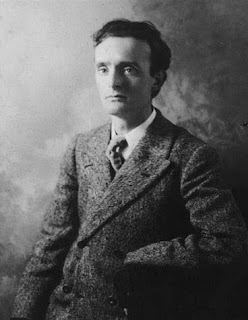
Esta poesía es de Padraic Colum, gran figura de la literatura irlandesa. La hemos traducido al español porque se lo merece. El nombre del autor sería en español Patricio Paloma. Nació en 1881 en County Longford. Estudió en Dublín. Trabajó en el ferrocarril irlandés. Empezó a escribir e hizo amistad con grandes de la literatura como Yeats y James Joyce. Thomas Kelly fue su mecenas. Recibió el apoyo de los nacionalistas y se dedicó al teatro, participando en la fundación del Abbey Theatre. Además de obras de teatro, publicó poesías, como la colección Wild Earth (Tierra Salvaje). Se casó con Mary Maguire y trabajaron juntos en el Irish Review. Se mudaron a los Estados Unidos de América y allí Colum se dedicó a escribir cuentos para niños. El hijo del rey de Irlanda fue un gran éxito. También escribió novelas como Los Cisnes Voladores. Él y Mary pasaron tres años en Paris, pero volvió a América para enseñar en la Universidad de Columbia. Murió a los noventa años de edad, en 1972, en Connecticut. Está enterrado en Sutton, al norte de Dublin.
9. Which countries did Mr. Colum live in? / ¿En qué países vivió el Sr. Colum?

Para leer el capítulo 167 de Cuentos de un Bosque Triturado, pincha en Parlando con Botepimienta.


To read chapter 166 of Tales of a Minced Forest, click on The Treasure Chamber Ghosts.
Para leer el capítulo 166 de Cuentos del Bosque Triturado, pincha en Los fantasmas de la cámara del tesoro.





.jpg)