English/Spanish blog from somewhere in La Mancha / Blog en inglés y español de un lugar de La Mancha

Welcome / Bienvenidos

Thanks for visiting us.
Gracias por visitarnos.
Powered By Blogger

Blog Archive

Showing posts with label Ireland / Irlanda. Show all posts

Friday, 4 October 2024

Equal Betty / Betty la Igualada

 Equal Lady Betty    / Lady Betty, la igualada

We weren’t sure we wanted to publish this post, which deals with such a dire subject. It’s not that we don’t believe in equal opportunities. It is that…we don’t think much of brutal people. We would prefer for those persons that are called men to be more like those that are called women than vice versa. But since we have decided to publish anyway, here goes the story of Lady Betty, a woman named Elizabeth Sugrue who was… an executioner.

No teníamos claro si queríamos publicar esta entrada, que tiene que ver con un tema muy triste. No es que no creamos en la igualdad de oportunidades. Es que… no nos gusta demasiado la gente bruta. Lo que nos gustaría es que esas personas a las que llaman hombres se pareciesen más a las llamadas mujeres y no al revés. Pero como hemos decidido publicar, ahí va la historia de Lady Betty, una mujer llamada Elizabeth Sugrue que fue…verduga.

This woman truly existed, back in eighteenth century Ireland, where anything could happen, but what we know about her may mostly be legend. Some say she was an educated woman from a wealthy family who enjoyed practicing this grim profession and even paid to be allowed to do this job. But others said she was a very poor woman with two children who needed to be fed. These people say her daughter died of hunger and her son eventually went abroad, probably to America, to earn a living there. The mother he left behind managed , with a lot of effort, to start a sort of inn or boarding house.

Esta señora existió realmente, en el siglo dieciocho y en Irlanda,  lugar en el que cualquier cosa es posible, pero lo que se sabe de ella es casi todo leyenda. Unos dicen que era una dama adinerada que disfrutaba ejerciendo esta lúgubre profesión y por eso se dedicaba a ella, hasta pagando por este privilegio. Pero otros dicen que se trataba de una mujer que había sido muy pobre y que tenía que alimentar a un hijo y a una hija. Cuentan que la hija murió de hambre y el hijo cogió puerta y emigró, probablemente a  América. La madre que dejó atrás consiguió con mucho esfuerzo poner en marcha una posada.

The said inn must have been in a rather isolated place because this lady could and did rob some of her guests and may have murdered one or another to fleece them more easily. The case is that her son returned from wherever he had been at and went to his mother’s inn. He did not, however, tell her who he was, and since he bragged before her that he travelled alone and with a lot of money, Betty murdered him while he slept to steal what he had with him. Later she would learn that she had killed her son, and since other people would come to know this too, she ended up arrested for parricide.

La tal posada debía de estar algo apartada porque esta señora podía robar a algunos de de sus huéspedes y eso hacía. Y hasta es posible que hubiese asesinado a alguno para robarle más fácilmente. El caso es que su hijo volvió del extranjero y fue a la posada de su madre. No se identificó pero sí dejó caer que viajaba sólo y presumió de traer con él un buen dinero. Betty le asesinó mientras dormía para robar ese dinero. Más tarde se enteraría de que había matado a su propio hijo, y como también se enteró de eso otra gente, acabó siendo detenida por parricidio.

Sentenced to death for the murder of her son, she was about to be hanged along with several other people, some of which were political prisoners and others members of very dangerous criminal bands. As luck would have it, the local executioner was, for some reason, unavailable. The prison authorities went from cell to cell asking those about to die if any one of them was willing to hang the rest. The life of the person who volunteered to be executioner would be spared.    

Condenada a muerte por asesinar a su hijo, quiso la suerte que la fuesen a colgar junto con otros cuantos reos, casi todos presos políticos o miembros de bandas de criminales peligrosos. Falló el verdugo oficial, y las autoridades carcelarias fueron de celda en celda preguntando a los que iban a morir si alguno querría hacer de verdugo y ahorcar a sus compañeros. A cambio, a ese le perdonarían la vida.

But no. None of the men who were to hang wanted to execute the others. Only Betty was ready to kill the others. Why did the guards allow a woman to be executioner? Because neither the guards or the doomed men wanted the blood of persons who had vengeful groups of support on their hands.Betty, however, didn’t think anyone would bother to seek revenge on a poor woman. And that is how the new career of this woman who never hesitated to kill anyone placed before her began.  She became a sensation. People flocked from far and near to see the female executioner perform her job.

Pero no. Ninguno de los hombres condenados a muerte quería aceptar esta oferta, probablemente porque temían más la posible venganza de los grupos que apoyaban a los reos que a la muerte inmediata. La única que estaba dispuesta a matar a cualquiera era Lady Betty. No pensaba que alguien fuese a vengarse de una pobre mujer. Los guardias prefirieron dejarla hacer a mancharse las manos de sangre ellos, al igual que los reos. Y así empezó la carrera de verduga de esta señora que no titubeaba en cargarse al que la pusiesen delante y que pronto se convirtió en algo sensacional, viniendo la gente de cerca  y de lejos para verla ejercer su profesión.    

Lady Betty lived and died in the jail where she worked, though she had received a pardon. Some say she died there of natural causes and others that a prisoner who was breaking stones in the prison courtyard put an end to her life. The word “hang-woman” was added to  the dictionary because of her, and today, the theatrical company  of famous actor and director Declan Donnellan successfully staged a play about this terrifying woman.

Lady Betty vivió y murió en la cárcel en la que trabajaba, aunque había sido indultada. Unos dicen que murió de causas naturales y otros que la asesinó un preso que estaba picando piedras en el patio.  La palabra “hang-woman” fue añadida al diccionario por ella y  hoy, la compañía del famoso actor y director  Declan Donnellan ha representado una obra de teatro sobre esta espantosa mujer.

Exercises in English:

 I – Fill in the blanks with these words: avenged, define,  white,  enemies, secret, firearms, eighteenth, hanged, fences,

The Whiteboys, also known as the Sons of Ghostly Sally, were an agrarian  ___________ society that defended the rights of tenant  farmers against  landlords and tithe collectors in ____________ century Ireland. They attacked at night, dressed in _____________ smocks which gave them their name. Because they would throw down ____________, they were also called Levellers. They would raid the houses of their ___________, damaging these properties and stealing any _____________ they might find in them. When caught, may whiteboys were _____________. Their accomplices very often _____________ them. Today, dictionaries record the word whiteboyism to ______________ any kind of rural violence performed by secret societies

 II – True or false. Explain all your answers.

_____1. Lady Betty had a job that was usually perfomed by men.

_____2. She was sentenced to death for  murdering  her two children.

_____3. Her son made money in Dublin.

_____4. Her son's name was Declan.

_____5. Lady Betty worked in a bakery.

_____6. She volunteered to kill some men in exchange of her life.

_____7. The guards let a woman be executioner because they feared revenge.

_____8. Once pardoned, Lady Betty moved to France.

_____9. The word hang-woman is in the dictionaries because of Betty.

_____10. Betty died of natural causes.

III – Match these words and their meanings: 1. doomed  2. spare 3. vengeful

4. flock  5.seek  6.courtyard  7. stage 8. inn 9. tithe 10. smock

___a. look for

___b. wanting revenge

___c. go somewhere in a group, especially a big one

___d. patio

___e. condemned

___f. a kind of hostal

___g. not touch, leave be

___h.to produce a show in a theatre

___i. a long white shirt

___j. a tenth of your money forcibly collected for the support of the church

 IV – What do you think?

1. Is it progress if a woman is allowed to be an executioner or not?

2. Would you enjoy going  to a theatre to see a musical about someone like Lady Betty or would you find this in bad taste?

3. Do you think it is right to pardon a person condemned to death for murder  if he or she is willing to murder more people for the government?

4. What do you think of the death penalty?

Ejercicios en español:

I – Rellena los huecos con estas palabras: vengados, describir, blancas, enemigos, secreta,  armas de fuego, dieciocho, ahorcados, vallas, derechos.

Los Whiteboys, también conocidos como los Hijos de la Fantasmal Sally, eran una sociedad ____________ agraria que defendía los _____________ de los agricultores arrendatarios frente a los latifundistas y los diezmeros en la Irlanda del siglo ____________. Atacaban de noche, vistiendo largas camisas ____________ que les dieron su nombre. Porque tumbaban ______________, también les llamaban Aplanadores. Invadían las casas de sus _____________, causaban daños a esas propiedades y robaban cualquier ______________ que pudiesen encontrar allí. Si les pillaban, muchos eran _____________. Solían ser ____________ por sus secuaces. Hoy, los diccionarios ingleses recogen la palabra whiteboyism  para definir cualquier tipo de violencia agraria realizada por sociedades secretas.

II – Verdadero o falso. Explica tus respuestas.

____1. Lady Betty tenía una profesión que era de hombres.

____2. La sentenciaron a muerte por asesesinar a sus dos hijos.

____3. Su hijo hizo dinero en Dublin.

____4. Su hijo se llamaba Declan Donnellan.

____5. Lady Betty trabajaba en una pastelería.

____6. Se ofreció voluntaria para matar a unos hombres a cambio de que la perdonasen la vida.

____7. Los guardias dejaron que una mujer fuese la verduga porque temían venganza.

____8. Cuando la perdonaron la vida, Betty se mudó a Francia.

____9. La palabra verduga está en los diccionarios ingleses por Betty.

____10. Betty murió de causas naturales.

III – Empareja estas palabras con sus significados: 1. condenados 2. no dañar 3. vengativo  4. acudir en grupo 5. buscar  6.patio 7. escenificar 8. posada 9. diezmo 10.blusón 

___a. intentar encontrar

___b. que quiere hacer que alguien pague por algo malo que ha hecho

___c. ir como en un rebaño

___d. casa de huéspedes

___e. que ha de sufrir un destino fatal

___f. en una casa, espacio cerrado que se deja al descubierto

___g. dejar sin tocar

___h. montar una obra de teatro

___i. camisola

___j. décima parte de las ganancias que ha de ser entregada a la iglesia

IV - ¿Qué opinas?

1. ¿Es progreso cuando a una mujer la permiten ser verduga o no?

2. ¿Disfrutarías de un musical sobre una persona como Lady Betty o lo considerarías de mal gusto?

3. ¿Crees que está bien perdonar a una persona condenada a muerte si accede a matar a más gente para el gobierno?

4. ¿Qué opinas de la pena de muerte?

We found the illustration in this post in Images from the Internet. / Encontramos la imagen que ilustra esta entrada en Imágenes de Internet. 


Monday, 15 April 2024

Mad Patsy / Patsy el Loco

Click on In the Poppy Field to read how Mad Patsy explains what is madness and what is not. You can also read there a translation to the Spanish of this poem.

Pincha en En el Campo de Amapolas para leer como Patsy el Loco explica lo que es locura y lo que no. También puedes leer ahí una traducción al español del mismo. 


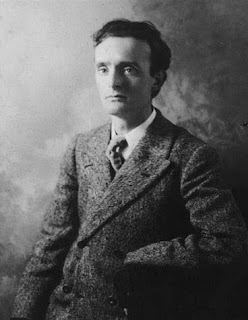
James Stephens, author of In the Poppy Field, was born in Dublin in a poor neighbourhood in 1880. He taught himself to read and write but was later adopted by a family his mother worked for and was then able to go to school with the other children of this family. When he grew up he wanted to be a soldier, but the army wouldn't have him because he was very small. He became interested in the Irish cause and became an Irish republican. A novelsit and poet, he produced a book of Irish Fairy Tales as well as several novels that had to do with Ireland, the most successful of which was and is probably The Crock of Gold. He died in 1950. 

James Stephens, el autor de In the Poppy Field, nació en un barrio pobre de Dublín en 1880. Aprendió a leer y a escribir de forma autodidacta y fue adoptado por una familia para la que trabajaba su madre y por eso pudo ir al colegio con los demás niños de esa familia. De mayor quiso ser soldado pero el ejercito no le aceptó por que era muy bajito y menudo. Se interesó por la causa irlandesa y se convirtió en un nacionalista republicano. Novelista y poeta, produjo un libro sobre Cuentos de Hadas Irlandeses y también escribió varias novelas que tenían que ver con Irlanda, siendo quizás  la más famosa La Marmita de Oro. Murió en 1950.

The poem In the Poppy Field  introduces us to a character that is almost biblical, because he seems to be a child who can enter the kingdom of Heaven, and lives on earth  like a lilly of the fields. The importance of poppies in this poem also has to do with the subject of war, because Patsy is undoubtedly not the kind that would serve in an army. We have already treated the subject of poppies and war in this blog, presenting another poem about these flowers and about the First World War, fought in the fields of Flanders, all covered with poppies but neath which lie the bodies of soldiers that perished right there. Click on In Flanders Fields to reread this poem and compare it to Patsy's.

La poesía In the Poppy Field nos presenta a un personaje casi bíblico, por aquello de que parece ser un niño que puede entrar en el reino de los cielos y vive como un lirio de los campos en la tierra. La importancia de las amapolas en esta poesía también está ligada al tema de la guerra, porque Patsy sin duda no es la clase de persona que va a servir en un ejercito. Ya hemos tratado en este blog otra poesía sobre la guerra, concretamente la Primera Guerra Mundial, la de los campos de Flandes, cubiertos de amapolas, pero en los que yacen los cadáveres de soldados que murieron luchando ahí mismo. Pincha en In Flanders Fields para volver a leer ese poema y poder compararlo con el de Patsy.       


Friday, 12 May 2023

Zadok the Priest / Sadoc el sacerdote


 Those of you who have watched the very interestsing coronation of Charles III on TV have had the chance to listen to Zadok the Priest, a British hymn composed for the coronation of George II. This piece has been played at every British coronation since and is a highlight of these ceremonies.Its lyrics are very simple. There is below a link to a video. This video has subtitles in both English and Spanish, so you can follow the words of the coronation anthem easily. Above, an image of the bottle of the oil used to anoint the new king. Below, Zadok anointing King Solomon. 

Aquellos de vosotros que habéis visto la muy interesante coronación de Carlos III en la tele, habéis podido escuchar el himno británico Sadoc el Sacerdote, compuesto para la coronación de Jorge III. Ha sonado en todas las coronaciones de monarcas ingleses desde entonces hasta ahora. Su letra es muy sencilla. El video con el que tenéis un vinculo debajo lleva subtítulos en inglés y en español, y por lo tanto el himno de la coronación es muy fácil de seguir. Arriba, una imagen del bote del aceite utilizado para ungir al nuevo rey. Debajo, Sadoc ungiendo al rey Salomón. 

Click here to listen to Zadok the Priest / Pincha aquí para escuchar Sadoc el Sacerdote.


George Frederic Handel was born in Halle, Germany in1685. His father wanted him to study law, but he insisted on being a musician and managed to attract the attention of important people who helped him do this. All his life he alternated sacred and profane music. He was, for example and for a time, organist at the Calvinist cathedral in Halle and on the other hand travelled to Italy to learn all aout Italian Opera. 

Jorge Federico Handel nació en Halle, Alemania, en 1685. Su padre quería que estudiase derecho, pero él insistió en ser músico y consiguió atraer la atención de gente importante que le ayudó a lograrlo. Durante toda su vida alternó la música sacra y la profana. Fue, por ejemplo, organista en la catedral calvinista de Halle y también viajó a Italia para aprender sobre la opera italiana.  

In 1711 Handel went to London, where he became director of London's Opera House. We won't go into all he did there, but only say that he was mostly successful in England, until 1734 when he suffered a stroke that left him speechless and deprived him of the use of four of the fingers of one of his hands. He managed to recover and was invited to Ireland, where he was asked to give concerts meant to benefit local hospitals. Handel loved Dublin and its people, and it was here that he composed his probably most famous work, a dramatic oratorio in the English language.The Messaiah was played in public for the first time on April 13, 1742 in the New Music Hall at Fishamble Street.It was sung by 26 boys and five men from the choirs of the cathedrals of St. Patrick and of the Most Holy Trinity. Handel's Festival, Messaiah on the Street,  takes place every year in Temple Bar in Dublin. It can be good fun, whether you like baroque music or not, and we recommend it. 

En 1711 se fue a Londres, donde le nombraron director de La Opera de Londres. No entraremos en detalles de todo lo que hizo en Inglaterra, que fue mucho, pero tuvo, en general, gran éxito allí hasta que sufrió un derrame cerebral en 1734 que le dejó por un tiempo sin habla y sin el uso de cuatro dedos de una mano. Logró recuperarse, y le invitaron a Dublín, para que diese unos conciertos en beneficio de hospitales locales. Fue allí donde estrenó la que es probablemente su obra más popular, El Mesías, un oratorio dramático en inglés. Se estrenó el 13 de Abril de 1742 en el New Music Hall de la calle Fishamble. Lo cantaron 26 niños y cinco hombres procedentes de los coros de las catedrales de San Patricio y de La Muy Santa Trinidad. Hoy en día, se celebra anualmente un festival de Handel, Mesías en la calle, en Dublín. Puede resultar muy divertido, incluso para los que no sepan apreciar la música barroca, y lo recomendamos.  

Handel eventually became a British subject and died rich and respected. So respected that he had a funeral with full state honours and is buried in Westminster Abbey. This man is also remembered for having helped less fortunate musicians and many other people. He is still making many happy with the music he left behind him. 

Handel eventualmente se hizo súbdito británico y murió rico y respetado. Tan respetado que tuvo un funeral de estado y está enterrado en la Abadía de Westminster. A este hombre también se le recuerda por haber ayudado a músicos menos afortunados y otra gente. Todavía está haciendo felices a muchos con la música que dejó tras sí.   

Exercises / Ejercicios

 I - Fill in the blanks with one of these words: anoint, animals, centuries, ingredient,  sacrificed, servants, jasmine, bosses, Patriarch, subjects, perfume, olives, Chrism, service, receive.

Rellena los huecos con una de estas palabras: ungir, animales, centenaria, ingrediente, sacrificado, siervos, jazmín, jefes, Patriarca, súbditos, perfumarlo, olivas, crisma, servicio, reciba.  

_________ oil is an oil used to anoint monarchs. Its chief ___________ is olive oil. This olive oil has to come from __________ that grow in the Mount of Olives in Jerusalem. This mount is the place where Jesus Christ accepted to be ___________ to redeem mankind. Many people think kings are _________ that can boss everybody around. But in truth, they are ___________. They have to spend their lives serving their ___________, not the other way around. The oil that was used to___________  England's new king was consecrated by the ___________ of the Orthodox Church of Jerusalem and by the Anglican bishop in Jerusalem too. This oil has to be consecrated because that is supposed to be what makes a king __________ his power from God.Other oils are added to the olive oil to __________ it. In the case of Charles III, none of the oils added came from __________. Sesame, rose, __________, cinnamon, neroli, berizoin, amber and orange blossom oils were added to the __________ old formula.       

El __________ es un aceite que se utiliza para ungir monarcas. Su principal ___________ es el aceite de oliva. Este aceite tiene que venir de ___________ que crecen en el Monte de los Olivos en Jerusalén. Ese monte es el lugar donde Jesucristo aceptó ser _____________ para redimir a la humanidad. Mucha gente cree que los reyes son ____________ que pueden avasallar a los demás. Pero en realidad ellos son ___________. Tienen que dedicar su vida a servir a sus ____________, y no al revés. El aceite que se usó para ungir al nuevo rey de Inglaterra fue consagrado por el ___________ de la Iglesia ortodoxa en Jerusalén y por el obispo anglicano de Jerusalén también. Hay que consagrar este aceite porque se supone que es lo que hace que un rey ___________ su poder de Dios. Otros aceites se añaden al de oliva para ____________.      En el caso de Carlos III, ninguno de los aceites añadidos procedía de ___________. Sésamo, rosa, ____________, canela, neroli, benjuí, ámbar y flor de azahar fueron añadidos a la ___________ formula.    

II - True or false. Explain all your answers.

1. Zadok was a priest who helped Solomon become king of Israel.

Sadoc era un sacerdote que ayudó a Salomón a convertirse en rey de Israel.  

2. The coronation anthem Zadok the Priest was written for Queen Elizabeth I.

El himno de la coronación Sadoc el sacerdote fue escrito para la reina Isabel I. 

3. Handel was born German but became a British subject.

Handel nació en Alemania pero se hizo súbdito británico. 

4. Handel wanted to be a lawyer but his parents didn't allow him to study law.

Handel quería ser abogado pero sus padres no le dejaron estudiar derecho.

5. Handel only composed religious music.

Handel solo componía música religiosa.

6. Handel went to Italy to play the organ in the Vatican.

Handel se fue a Italia para tocar el órgano en el Vaticano. 

7. Handel loved Ireland.

Handel amaba Irlanda.  

8. The Messaiah is an opera.

El Mesías es una opera.

9. Handel died in poverty.

Handel murió pobre. 

10. Every year, in April, the Irish celebrate a festival in honour of Handel.   

Todos los años, en Abril, los irlandeses celebran un festival en honor a Handel. 


Thursday, 17 March 2022

St. Patrick's Day 2022

Give us a rainbow, you who can.  

Dadnos un arco iris, vosotros que podéis.

Friday, 25 February 2022

Lilibulero Part II / Lilibulero - Segunda Parte

Now that you have read all about the Battle of the Boyne in the previous post you are ready to listen to the Irish jig Lilibulero. 

Ahora que habéis leído sobre la Batalla del Boyne en la entrada anterior estáis listos para escuchar la giga irlandesa Lilibulero. 

But as we said, the lyrics we will listen to have nothing to do with those sang when James and William fought it out.  

Pero como dijimos, la letra que vamos a escuchar no tiene nada que ver con la que se cantaba cuando Jacobo y Guillermo se enfrentaron. 

They have to do with a really tough woman. We´ve translated it to the Spanish. 

Tienen que ver con una tía muy dura. La hemos traducido al español. 

Lilibulero – The Farmer's Curst Wife

There was an old farmer in misery  he did dwell.

He had an old wife, and she gave him hell.

The Devil came to him at the plough

“I want your wife and I want her now.”

The devil he hoisted her up on his hump

And down into Hell with her he did jump.

Two little imps were playing with chains

She took up her stick and knocked out their brains.

The Devil he hoisted her back on his hump

And back to Earth with her he did jump.

“Now I’ve been the Devil for most of my life,

But I never knew hell till I met your wife.”

 Lilibulero – La Esposa Espantosa

Un viejo granjero angustiado vivía.

De su vida un infierno su mujer hacía.

Se le apareció el Maligno en malísima hora.

Dijo, “Quiero a tu esposa y la quiero ahora.”

La agarra el Demonio y se la sube a la chepa,

Y pega un gran salto que en el Infierno les deja.

Con cadenas la amenazan dos diablillos traviesos

Ella alza su garrota y les aplasta los sesos.

El Demonio se la vuelve a subir a la chepa,

Pega un gran salto y en la granja la deja.

“He sido el Demonio casi toda mi vida,

Y no he conocido el infierno hasta dar con esta tía.” 


If you want to sing Lilibulero, you have to sing  lilibulero  bulen a la between lines.

And the chorus  goes :  lero lero lilibulero, lilibulero bulen a la, lero lero lilibulero, lilibulero bulen a la

Si quieres cantar lilibulero, tienes que cantar entre lineas lilibulero bulen a la.

Y el estribillo va así lero lero lilibulero, lilibulero bulen a la, lero lero lilibulero, lilibulero bulen a la


To listen to a great rendering of Lilibulero, so very clear, click on: 

Para escuchar una buenísima rendición, clarísima,  pincha en: 

Lilibulero-The Farmer's Curst Wife  (La esposa espantosa)


Lilibulero - Part I / Lilibulero - Primera Parte

Lilibulero is an Irish jig with a lot of history. You may have heard it in more than one period film. Some call it the March of the Prince of Orange. We´re going to tell you why. 

Lilibulero es una giga irlandesa con mucha historia. Es muy posible que las hayas escuchado en alguna peli de época. Algunos la llaman la marcha del príncipe de Orange, y vamos a explicar por qué.  

This gentleman is James II of England. James was a Catholic but pacted with the higher representatives of the Chrurch of England who allowed him to reign despite his religion. However, he had to allow his two daughters to be raised as Protestants. When his daughters were grown, James married again and had a son, and therefore a male heir.

Este señor es Jacobo II de Inglaterra. Jacobo era católico, pero pudo pactar con los altos cargos de la Iglesia de Inglaterra que le permitieron llegar a reinar a pesar de su religión. Una de las concesiones que tuvo que hacer fue permitir que sus dos hijas fuesen educadas como protestantes. Pero Jacobo se volvió a casar siendo sus hijas ya mayores y tuvo un heredero varón. 


This other gentleman is James Francis Edward, son and heir of James II.. Some people felt that James would raise this boy as a Catholic and the Protestant supporters of his daughters wanted the boy out of the way. So what happened to James Francis Edward was similar to what happened to La Beltraneja in Spain. People began to spread rumors that he was illegitimate. His enemies said absurd things like that he had been smuggled in a bed pan or something similar into the room where the queen was supposed to be giving birth.  

Este otro señor es Jacobo Francisco Eduardo, el hijo y heredero de Jacobo II.  A Jacobo II se le estaba notando demasiado que quería ser católico, y los partidarios protestantes de sus hijas quisieron quitarse al nuevo heredero de en medio, temiendo que el niño sería educado como un católico. La suerte de Jacobo Francisco Eduardo fue algo semejante a la de la Beltraneja en España. Sus enemigos empezaron a decir que no era hijo del rey, que le habían colado en la habitación en la que la reina estaba supuestamente dando a luz dentro de un orinal o un brasero calientacamas y otras calumnias semejantes.


This lady and this gentleman are Mary and William of Orange. Mary was the eldest daughter of James II and since it had taken her father so long to sire a male heir she had grown up convinced that she would be queen of England. She married her cousin William of Orange, a Dutch prince who was quite interested in becoming King of England. So he gathered an army and took it there and kicked his father-in-law off the throne. 

Estos señores son María y Guillermo de Orange. María era hija de Jacobo II y, como su padre había tardado tanto en tener un hijo varón, había crecido convencida de que sería reina de Inglaterra. Se casó con su primo Guillermo de Orange, que era protestante como ella, y al que le hacía mucha ilusión ser rey de Inglaterra. Así que se fue para allá con un ejercito y echó a su suegro del trono.

This is a picture of an Irish river that is lovely to behold. It is of the river Boyne. We´ve put a picture of it here because it gave its name to the most decisive battle in the quarrel between William and James. Yes, the Battle of the Boyne. William counted with some 36.000 men and James only had about  23.500 fighting on his side. James' army was composed mostly of Irish Catholics and French troops that had come to support him. The cavalry was really good, but the infantry left much to be desired, most of its soldiers being peasants armed with scythes and outdated weapons.William's army was made up mostly of professional soldiers from many different countries, including Dutchmen, Danes and French Huguenots. William did not trust the English and Scottish troops that were to fight on his side because probably the only thing these fellows had clear was that a lot of  foreigners were going to decide the fate of their country. William won and he and Mary became king and queen of Great Britain.    

Esto es una foto de un río irlandés muy bonito que se llama Boyne. Hemos puesto esta foto aquí, por que la batalla más decisiva de la guerra entre Guillermo y Jacobo lleva el nombre de este río, sí, eso es, la batalla del Boyne. Guillermo contaba con unos 36.000 hombres y en cambio Jacobo sólo tenía unos 23.500.  El ejercito de Jacobo estaba compuesto sobre todo de católicos irlandeses y de tropas francesas que habían venido a apoyarle. La caballería era muy buena, pero la infantería pésima, ya que en su mayoría la integraban campesinos con guadañas y armas obsoletas. Además, no habían recibido entrenamiento. El ejercito de Guillermo, por el contrario, pudo emplear armamento más moderno y muchos de los soldados eran profesionales de muchas naciones, incluyendo holandeses, daneses y hugonotes franceses. Guillermo no se  fiaba de las tropas inglesas y escocesas que peleaban en su bando, porque muchos de sus integrantes sólo tenían claro que había un montón de extranjeros decidiendo la suerte de su país. Ganó Guillermo, y él y María se convirtieron en los reyes de Gran Bretaña. 

What does all this have to do with Lilibulero? Well, someone wrote some anti-Jacobite lyrics for this tune and it was played and they were sang so much that it is said James was swept out of England to the tune of Lilibulero. 

¿Qué tiene que ver todo esto con Lilibulero? Pues que alguien puso letra anti-jacobita a esta giga irlandesa y se cantó y tocó tanto que se dice que Jacobo fue barrido de Inglaterra al son de esta giga. 

We aren't going to study the anti-Jacobite lyrics here. We are going to listen to the music but with another set of lyrics. They also have to do with fighting, but done by other people. We will do it in the next post because this one is long enough already. 

No vamos a estudiar aquí la letra anti-jacobita. Vamos a escuchar la música pero con otro tipo de letra, también peleona pero con otros protagonistas. Lo haremos en la próxima entrada, porque esta ya es muy larga.   

One last word. Boyne is not English for boina.  At least I don't think it is.

Una última cosa. Boyne no significa boina en inglés. O eso creo. 

Wednesday, 23 February 2022

A Wandering Old Woman's Wish / El deseo de una vieja vagabunda

UNA VIEJA DE LOS CAMINOS 

¡Oh quién tuviese una casita!

¡Ser dueña del hogar y la banqueta y todo,

De la turba amontonada frente al fuego

Y la pila de tochos de césped y barro junto a la pared!

 ¡Poseer un reloj con pesas y cadenas

Y un péndulo columpiándose arriba y abajo!

¡Una alacena sin puertas repleta de relucientes piezas de vajilla,

Moteadas, blancas y azules, y marrones!

Podría pasarme el día ocupada

Fregando el suelo y barriendo el hogar

Y volviendo a colocar en los estantes

Mis tesoros blancos y azules y moteados.

Podría pasar la noche quietecita,

Sentada junto al fuego solita,

Segura de una cama y sin ganas de alejarme

Del tic tac del reloj y de la reluciente loza esmaltada.

¡Uy, qué cansada estoy de la niebla y la oscuridad!

¡De senderos sin rastro de casas o arbustos!

¡Harta estoy de pantanos y carreteras,

Del viento gritón y del solitario silencio!

Y yo le rezo a Dios en las alturas,

Y yo le rezo día y noche pidiendo

Una casita, una casita propia,

Lejos del recorrido del viento y la lluvia.


AN OLD WOMAN OF THE ROADS 

O, to have a little house!
To own the hearth and stool and all!
The heaped up sods against the fire,
The pile of turf against the wall!

To have a clock with weights and chains

And pendulum swinging up and down!
A dresser filled with shining delph,
Speckled and white and blue and brown!

I could be busy all the day

Clearing and sweeping hearth and floor,
And fixing on their shelf again
My white and blue and speckled store!

I could be quiet there at night

Beside the fire and by myself,
Sure of a bed and loth to leave
The ticking clock and the shining delph!

Och! but I’m weary of mist and dark,

And roads where there’s never a house nor bush,
And tired I am of bog and road,
And the crying wind and the lonesome hush!

And I am praying to God on high,

And I am praying Him night and day,
For a little house – a house of my own
Out of the wind’s and the rain’s way.


Esta poesía es de Padraic Colum, gran figura de la literatura irlandesa. La hemos traducido al español porque se lo merece. El  nombre del autor sería en español Patricio Paloma. Nació en 1881 en County Longford. Estudió en Dublín. Trabajó en el ferrocarril irlandés. Empezó a escribir e hizo amistad con grandes de la literatura como Yeats y James Joyce. Thomas Kelly fue su mecenas. Recibió el apoyo de los nacionalistas y se dedicó al teatro, participando en la fundación del Abbey Theatre. Además de obras de teatro, publicó poesías, como la colección Wild Earth (Tierra Salvaje). Se casó con Mary Maguire y trabajaron juntos en el Irish Review. Se mudaron a los Estados Unidos de América y allí Colum se dedicó a escribir cuentos para niños. El hijo del rey de Irlanda fue un gran éxito. También escribió novelas como Los Cisnes Voladores. Él y Mary pasaron tres años en Paris, pero volvió a América para enseñar en la Universidad de Columbia. Murió a los noventa años de edad, en 1972, en Connecticut. Está enterrado en Sutton, al norte de Dublin.        

This poem is by Padraic Colum, grand figure of Irish Literature. If his name were in Spanish, it would be Patricio Paloma. We have taken the trouble to translate this poem because it deserves it. He was born in 1881 in County Longford, moved to Dublin and studied there. He worked for a time with the Irish Railway. He began to write and was befriended by writers like Yeats and James Joyce. Thomas Kelly was his Maecenas. The Irish nationalists gave him their support too and he began to work in the theatre, where he participated in the founding of the Abbey Theatre. Aside from plays, he also wrote poems, such as the collection Wild Earth. He married Mary Maguire and they worked together to establish the Irish Review. They moved to the U.S.A. where Colum began to write children's stories. The Son of the King of Ireland was a great success. He also wrote novels like The Flying Swans. He and Mary spent three years in Paris, but he returned to America to teach at the University of Columbia. He died at the age of 90 in 1972, in Connectcut. He is buried in Sutton, north of Dublin.   

I - Answer these questions: / Responde a estas preguntas:

1. What is an old woman of the roads? / ¿Qué es una vieja de los caminos?

2. What is the wish of the old woman's heart? / ¿Qué es lo que más desea esta mujer?

3. Why does the old woman want a stool? / ¿Para qué quiere una banqueta?

4. Why does she want to be sure of a bed? / ¿Por qué desea estar segura de tener una cama en la que dormir? 

5. Who does the old woman ask for a home? /¿A quién le pide la vieja una casita?

6. What is delph? / ¿Qué es, en español, delph? 

7. What does the old woman fear the most? / Qué es lo que más teme la vieja?

8. What sort of works did Padraic Colum write? / ¿Qué clase de obras escribía Padraic Colum?

9. Which countries did Mr. Colum live in? / ¿En qué países vivió el Sr. Colum? 

10. What would Padraic Colum's name be in Spanish? / ¿Cómo se llamaría Padraic Colum si su nombre estuviese en español? 

II - Think a little and give your opinion. / Piensa un poco y da tu  opinión. 

11. Do you think this is a sad poem? Is there hope for the old woman? / ¿Es este un poema triste? ¿Hay esperanza para la vieja?

12. Some say that every woman wants a home. Is this true? Is it also true for men? Is it true for you?/  Algunos dicen que toda mujer quiere una casa propia. ¿Es esto verdad? ¿Lo es también para los hombres? ¿Lo es para ti?

13. In Spanish, there is a saying that goes "el casado casa quiere." Explain in English what this saying means. / Explica en inglés lo que quiere decir el dicho español "el casado casa quiere." 

III - Find words in the text that mean: / Encuentra palabras en el texto que signifiquen: 

14. Fuel burnt in Irish fireplaces./ Combustible que se quemaba en chimeneas irlandesas.

15. Not pleased to have to do something. / Sin ninguna gana de hacer algo.


You can listen to the very author read this poem clicking on: 

Puedes escuchar al mismísimo autor leer esta poesía pinchando en:

Mr. Colum reads Old Woman of the Roads.

Saturday, 6 December 2014

Countess Cathleen Test / Test de la Condesa Catalina

After reading "The Legend of The Countess Cathleen," complete this test. /
Contesta este test después de leer La Leyenda de la Condesa Catalina.

I - Answer these questions: / Contesta estas preguntas:
1. What was Cathleen's job? / ¿En que consistía el trabajo de Catalina?
2. Was it an easy job? Why or why not? / ¿Era un trabajo fácil? ¿Por qué?
3. Where did Cathleen send Fergus? Why? / ¿A dónde mandó Catalina a Fergus? ¿Por qué?
4. Who were Heartless and Callous? ¿Quiénes eran Malaentraña y Desaprensivo?
5. Why did they come to the village? / ¿Por qué fueron al pueblo?
6. Why did Cathleen visit the strangers? / ¿Por qué visitó Catalina a los extraños?
7. What did the strangers ask Cathleen for? / ¿Qué le pidieron los extraños a Catalina?
8. What happened when she gave the demons what they wanted? / ¿Qué pasó cuando ella les dió a los demonios lo que querían?
9. Why did Cathleen die? / ¿Por qué murió Catalina?
10. Did the strangers get to keep her soul? Why or why not? / ¿Se quedaron con su alma los extraños?
 ¿Por qué?

II - Find words with these meanings in the text:/ Encuentra palabras en el texto con estos significados:
1. correctly
2. a period without rain
3. island
4. a very small fruit
5. keep
6. come near
7. finishing
8. fill with
9. stop to think twice
10. strange and inexplicable
11. something dangerous for one
12. villain, bad person
13.unable to see
14. pact
15. stupid person
16. put your name on a document
17. became black  
18. see from a distance
19. make happy again
20. cause problems
21. always giving orders


III - Describe these characters' looks and character. / Describe el aspecto físico y el carácter de estos tres personajes (Fíjate en que "character" tiene dos significados: personaje y carácter.)

1. Cathleen


2. Fergus


3. Heartless and Callous


Tuesday, 17 March 2009

I´m off to celebrate... / ¡Me he ido a celebrar...

St. Patrick´s Day!
El día de San Patricio!

Yes, I´m off to celebrate!
¡Sí, me he ido a celebrar!

If you need to find me, I went this way, stop at this curious page in French.
Si necesitas encontrarme, me fuí en esta dirección, pasa por esta página curiosa en francés.

http://www.contes-irlandais.com/presentation.html


Tuesday, 18 December 2007

Christmas in Drogheda


I saw three ships come sailing in, come sailing in, come sailing in!
I saw three ships come sailing in, on Christmas day in the morning!

¡Ví tres naves arribando, arribando, arribando!
¡Ví tres naves arribando, el día de Navidad, por la mañana!

Good evening to you all. I´m Fergus MacLob O´Toora. Now, that was an old Christmas carol I was singing. And I´m here to tell you a Christmas story that reminded me of it. And I´ll tell the story in standard English, which I´ve been asked to speak, and which I can speak whenever I want to.And I will be both politically and grammatically correct because my son Michael insisted on it.

¡Buenas noches a todos! Soy Fergus MacLob O´Toora. Bien, eso que estaba canturreando era un viejo villancico. Y estoy aquí para contaros un cuento navideño que me lo recuerda. Y procuraré ser gramaticalmente y políticamente correcto porque mi hijo Michael ha insistido mucho en que lo sea.

It´s about my favorite football team, the Drogheda United. I am a great fan of this team, so the minute I discovered the Internet, what could be more natural than I should look up pages about my team?

Es sobre mi equipo de fútbol favorito, el Drogheda United. Soy un gran hincha de este equipo, así que el minuto en que descubrí Internet empecé a buscar páginas sobre mi equipo.

The first thing I found was a curious story that made me think, there´s a Christmas story if ever there was one. But the next time I visited the page I had found it on, the story was gone. Still, there must be some truth to it. so I´m telling it anyway. It went like this:

Lo primero que encontré fue una anécdota curiosa que me hizo pensar, he ahí un cuento navideño, si es que alguna vez hubo uno . Pero la siguiente vez que visité la página, el cuento había desaprarecido. Aun así, debe de haber algo de verdad en él, así que lo voy a contar de todas formas. Era así:

The colours of the Irish Drogheda United Football Club are the same as the colours of the Turkish Trabzonspor team. And a star and a crescent are part of the emblem of the Drogheda United.

Los colores del club de fútbol Drogheda United son los mismos que los del equipo turco Trabzonspor. Y una estrella y una luna creciente son parte del emblema del Drogheda United, F.C.
And there was a story on the Internet that said the Irish team had adopted these colours and the star and the crescent because they were grateful to the Turks because of help received during the Great Irish Potato Famine.

Y había una historia en Internet que decía que el equipo irlandés había adoptado estos colores y la estrella y la luna creciente en agradecimiento a los turcos por la ayuda que éstos prestaron a los irlandeses durante la Gran Hambruna Irlandesa.

When I returned to the page a couple of days later, it said that this story was not exactly true. The star and the crescent are part of the coat of arms of Drogheda, and date from 1194, hundreds of years before the famine.

Cuando volví a la página unos días después, decía que esta historia no era del todo cierta. La estrella y la luna creciente son parte del escudo de Drogheda desde 1194, cientos de años antes de la Gran Hambruna Irlandesa.

But it doesn´t much matter, because what I´m interested in is the help received during the famine. Now, to understand this story, you have to know what the Great Irish Potato Famine was. I will tell you briefly, but if you want to know more, a good page is The History Place, where you can learn all the tragic details.

Pero no importa mucho, porque lo que realmente me interesa no son los colores. Es la ayuda recibida durante la hambruna. Bien, para entender este cuento hay que saber lo que fue la Gran Hambruna. Os lo explicaré brevemente, pero si queréis saber más, una buena página para aprender es "The History Place, " donde podéis encontrar todos los tristes detalles.


In September 1845, a fatal fog wafted across the fields of Ireland. As a result, the leaves on potato plants suddenly turned black, and curled and stank, and did all sorts of horrible things until they rotted away entirely. The cause seems to have been an airborne fungus called phytophthora infestans.

En septiembre de 1845, una niebla fatídica flotó sobre los campos de Irlanda. A consecuencia de esto, las hojas de las plantas se volvieron negras, se rizaron y apestaron e hicieron toda clase de cosas horribles hasta que las plantas y sus patatas se volvieron incomestibles. La causa parece haber sido un hongo transportado por el aire llamado phytophthora infestans.
The really terrible thing is that the Irish totally depended on the potatoes to be able to survive. What followed was many years of hunger and diseases and fighting, incompetence and desperation during which a great many people died and a great many others immigrated.

Lo realmente terrible era que los irlandeses dependían totalmente de las patatas para poder subsistir. Lo que siguió fueron muchisimos años de hambre, enfermedades, peleas, incompetencia y desesperación durante los cuales murieron muchísimas personas y otras muchas tuvieron que emigrar.

While all this was happening, the sultan of Turkey, Abdülmecid, offered to send the Irish 10,000 pounds sterling. It seems that Queen Victoria advised him to send only 1,000 sterling because she herself had sent 2,000. Abdülmecid did what the English queen asked him to, but he secretly sent three ships full of food. They landed in Drogheda harbour.

Mientras todo esto estaba sucediendo, el sultán de Turquía, Abdulmecid, quiso mandar 10 mil libras esterlinas a los irlandeses. Parece ser que Victoria, reina de Inglaterra, le aconsejó que sólo mandase mil libras esterlinas porque ella sólo había mandado dos mil. Abdulmecid hizo lo que le pidió la reina inglesa pero envió en secreto tres naves llenas de comida que llegaron al puerto marítimo de Drogheda.


I´m not telling this story because I want to badmouth Queen Victoria during the Christmas season. She is a person, even if she is English and a queen, and as worthy of respect during Christmas as any other person. And of course she has her own supporters who will say she was a peach.

No estoy contando este cuento para poner verde a la reina Victoria durante la Navidad. Ella es una persona, aunque sea inglesa y una reina, y tan digna de respeto como cualquier otra persona durante la Navidad. Y, claro, tiene sus partidarios que dirán que era una perita en almíbar.

And I know there are those who will say the sultan only offered to help the Irish to spite the English, and maybe he should have looked into his own affairs, which were doubtlessly also complicated.

Y yo sé que hay quienes dirán que el sultan Abdulmecid sólo ofrecío su ayuda a los irlandeses para fastidiar a los ingleses, y que debía de haberse ocupado de sus propios asuntos, sin duda tan complicados como los de la reina Victoria.

But I am not interested in power play. Only in fair play.

Pero no me interesan los juegos de poder. Solo el juego limpio.

Now a famine can happen anywhere, and we should all bear this well in mind. All I say is, when the starving people saw those ships sailing in, it must have felt like Christmas. So if this isn´t a
Christmas story I don´t know what is.

Bien, pues una hambruna puede ocurrir en cualquier parte y todos deberíamos tener esto bien en cuenta. Lo único que digo es: cuando la gente hambrienta vió esos barcos arribando, debieron sentirse más felices qye unas pascuas. Así que si este no es un cuento de Navidad, yo no sé qué es un cuento de Navidad.

I wish you a merry Christmas, and may you and I never need ships like these, and may we be ready and willing to send them wherever they are needed.

Os deseo a todos una feliz Navidad, y que nunca nos hagan falta ni a vosotros ni a mí naves como éstas, y que estemos siempre listos y dispuestos a mandarlas donde quiera que hagan falta, sea donde sea.

And now I´m leaving, because being full of the Christmas spirit, I have to finish a shoe I want to give my son for Christmas, even if he is a supporter of the Cork City F.C.

Y ahora me voy porque imbuído del espíritu navideño, he de rematar un zapato que quiero regalar a mi hijo por Navidad, a pesar de que él es un hincha del club de fútbol de Cork City.

Labels

Advent Calendar/Calendario de adviento (25) Animal rights / Derechos de los Animales (7) Art / Arte (17) Astronomy / Astronomía (9) Australia /Australia (2) Authors (30) Birthdays / Cumpleaños (36) Carnival / Carnaval (5) Christmas / Navidad (37) Compositions / Redacciones (15) Condolences / Condolencias (7) Constitutionalism / Constitucionalismo (4) Contests / Concursos (2) Coronations/Coronaciones (1) Ecology / Ecología (3) Extracurricular Activities / Actividades Extraescolares (9) Feng Shui (8) Field Trips (1) Films / Películas (8) Games/Juegos (3) Geography / Geografía (4) Ghosts / Fantasmas (14) Grammar to Get by / Gramática para apañarse (67) Halloween / Noche de Ánimas (32) Health / Salud (3) History / Historia (43) Human Rights / Derechos Humanos (13) Inventions / Inventos (1) Ireland / Irlanda (10) Laws / Leyes (5) Legends / Leyendas (54) Listening / Escuchar (32) London / Londres (5) Maths / Matemáticas (5) Memes/Memes (2) Messages / Mensajes (8) Mini Calendar / Mini Calendario (10) Mini Mythology / Mini Mitología (82) Mini Zodiac / Mini Zodiaco (12) Mr. Eddy / El Señorito Eddy (5) Music / Música (112) Needn´t Be Lost Causes / Causas No Necesariamente Perdidas (4) News / Noticias (25) Novels (7) Nursery Rhymes / Rimas para niños (19) Obituaries / Obituarios (6) Other Animals / Otros Animales (7) People/Gente (48) Plants / Plantas (12) Poems / Poesías (101) Poets/ Poetas (51) Precious and the Air / Preciosa y el Aire (4) Recipes / Recetas (21) Recommended Reading / Lecturas Recomendadas (34) Recommended TV series / Series de televisión recomendadas (1) Saints / Santos (23) Sayings and Saws and Proverbs and Quotes and Maxims / Dichos y refranes y proverbios y citas y máximas (12) Science / Ciencias (5) Scotland / Escocia (12) Scotland /Escocia (1) Shopping and gifts / Compras y regalos (8) Short Texts to Read / Breves textos que leer (33) Songs / Canciones (127) Speaking / Hablar (17) Special Days / Días Especiales (117) Sports / Deportes (9) Story report / ficha de un cuento (25) Tales of a Minced Forest/Cuentos del Bosque Triturado (167) Toora Chronicles / Crónicas Toora (245) Trailers (11) Valentine´s Day / Día de San Valentín (11) Vocabulary / Vocabulario (39) Wales / Gales (8) Winter /Invierno (2) Writing / Escribir (16)

Blogroll