English/Spanish blog from somewhere in La Mancha / Blog en inglés y español de un lugar de La Mancha

Welcome / Bienvenidos

Thanks for visiting us.
Gracias por visitarnos.
Powered By Blogger

Blog Archive

Tuesday, 17 September 2013

On a Schoolroom / Sobre un aula


The Schoolroom by Francesco Bergamini / El aula - Francesco Bergamini


Fergus

Where did you find this? 

¿Dónde has encontrado esto?


Somewhere among Images from the Internet. What do you think of it?

Por ahí entre Imágenes de Internet.  ¿Qué te parece?


Fergus

The umbrella is open because there are leaks in the ceiling?

¿El paraguas está abierto porque hay goteras en el techo?


Michael 

I´m not sure. I believe there are leaks in the umbrella. Maybe that kid is hyperactive.  

No estoy seguro. Creo que hay goteras en el paraguas. Puede que ese niño sea híperactivo.


Fergus

Do you think the teacher looks happy?

¿Crees que el docente parece feliz?


Michael

Well, there are only nine kids in class. That should make the teacher happy. 

Bueno,  sólo hay nueve alumnos en el aula. Eso debería contentar al profe.


Fergus

What are you saying? This might be a private school. I don´t think that fellow is making much money. There were more kids in the average family back then than there are in this classroom.  The kids do look attentive, though, don´t they? 

¿Qué dices? Esto puede ser una escuela privada. No creo que ese individuo esté ganando mucho dinero. En aquel entonces había más niños en una familia normal que los que hay en el aula esa.


Michael 

I don´t think more would fit round the brazier. I think they are doomed to have varicose veins if they don´t die of pneumonia. 

No creo que quepan más alrededor del brasero. Me parece que están condenados a acabar con varices si no se mueren de una pulmonía. 


Fergus

Well, all the kids seem to be paying attention. Is it studying used to pay back then?

Pues todos los niños parecen estar prestando atención. ¿Será que entonces estudiar servía para algo?


Michael 

Oh, Dad! To judge from the teacher´s umbrella...well, maybe what it used to be was fun. 

¡Ay, Papá! Por la pinta que tiene el paraguas del profe...pues a lo mejor es que entonces era divertido.


Fergus

You´re such an optimist. Will you ask your pupils to comment on this picture? 

Tú siempre tan optimista. ¿Les pedirás a tu discípulos que comenten este cuadro?


Sunday, 15 September 2013

The Parafairy / El Parahada

Once they entered the garden of Owlwood Manse, Alpin, Arley and Alonso began to search it, the first two seeking magic pencils and the last looking forward to confronting the sinister bogeyman with the sack. 

Tras haber entrado en el jardín de la casa parroquial del bosque de los búhos, Alpin, Arley y Don Alonso comienzan a registrarlo, los primeros buscando lápices mágicos y el último al siniestro hombre del saco.

Alpin

Well, what? Spotted any pencils?

Bueno, ¿qué? ¿Se divisan lápices?

Don Alonso

I’ve spotted…headstones? Come here, lads, and tell me if I am seeing right.

Yo he divisado…¿lápidas? Venid, niños, y decidme si es que veo bien o no.


Arley

Oh, yes, indeed!

¡Uy, sí!


Owlwood Manse Private Cemetery / Cementerio Privado de la mansión del bosque de los búhos

Alpin

Don´t tell me we´re going to have to dig tombs up to find the treasures, like Egyptian grave robbers. I can´t do that. It´s not against my principles.  It´s that I’m famished and about to faint.  I’ve had nothing to eat in quite a while now, so you guys will have to do it by yourselves. There are spades in the garden shack. I noticed them while I was searching it.

No me digais que va a haber que cavar tumbas para encontrar los lápices como ladrones egipcios. Pues yo no puedo hacerlo. No es que vaya en contra de mis principios.  Es que estoy famélico y a punto de desmayarme. Hace ya rato que no he comido, así que tendréis que hacerlo vosotros. Hay picos y palas en el cobertizo. Las vi mientras lo registraba.

Arley

I don´t think these graves are old enough for us to treat them like an archeological find. I wouldn´t touch them. The most I might do is walk around them and see if there is a pencil lying somewhere about. And if I did see one, I´m not sure I would have the nerve to pick it up and take it from a place like this.

No creo que estas tumbas sean lo suficientemente viejas como para que las tratemos como un hallazgo arqueológico. Yo no las tocaría. Lo más que yo haría es caminar por entre ellas para ver si hay algún lápiz por ahí. Y de encontrar uno, no sé si tendría el valor de cogerlo y llevármelo de semejante sitio.

Alpin

The old codger will do it. We´ll tell him this is an Iberian archeological site. He might believe us. He is so worried about not knowing what he is seeing.

Lo hará el canica. Le diremos que esto es un yacimiento íbero. Igual se lo creé. Le preocupa tanto no saber lo que está viendo.

Don Alonso

I´m seeing a man with a sack. Is that so?

Estoy viendo un hombre con un saco. ¿Es así?


Alpin

Yaaaaaaah! Uncle Jumbisack himself!

¡Ayyyyy! ¡El mismísimo tío del jumbisaco!

Arley

Where? Where?

¿Dónde? ¿Dónde?

Alpin

Right there, digging a grave before our eyes. I can´t believe it! We caught the monster in the act! And in broad daylight! I want out! Where was the hole?

Ahí mismo, cavando una tumba ante nuestros ojos. No me lo puedo creer. ¡Hemos pillado al monstruo con las manos en la masa!¡Y a plena luz del sol!¡Yo me largo! ¿Dónde estaba el agujero?

Don Alonso

Calm down, children. The last time I saw something that looked like that sack it turned out to be a wineskin instead of a giant. This man´s face is quite red. He´s probably fond of a drink or two. We shall be very scientific and verify this! Hey there, sir! You of the jumbisack!

Tranquilizados, muchachos. La última vez que vi algo que se parecía a ese saco resultó ser un pellejo de vino en vez de un gigante. La cara de este hombre está bastante roja. Seguro que le gusta empinar el codo. Seremos muy científicos y lo verificaremos. ¡Eh, señor! ¡Usted, el del jumbisaco!


Uncle Jumbisack / El tío del jumbisaco

Hey! Careful what you prick with that sword! Some of us are mortal! I mean I myself and the lady I´m carrying in the sack.

¡Eh! Ojo con lo que vaya a pinchar con esa espada. ¡Qué algunos somos mortales! Lo digo por mí y la señorita que llevo en el saco.

Don Alonso

You villain! Free that lady at once!

¡Villano! ¡Soltad inmediatamente a esa dama!


Uncle Jumbisack / El tío del jumbisaco

It´s a she cat, but fine, I´ll release her. It would be better if I did it deeper in the forest. She´s feral and lives there. I´m neither a monster nor a wino. I´m a veterinarian with cuperosis. But why am I telling you all this? You should be telling me why you are invading my property.   

Es una gata, pero vale. Aunque sería mejor que la soltase en el bosque. Es salvaje y vive ahí. No soy ni un monstruo ni un beodo. Soy un veterinario con cuperosis. ¿Pero por qué les estoy dando estas explicaciones? Ustedes deberían estar dándomelas a mí por invadir mi propiedad. ¿Qué demonios hacen aquí?

Pilar, the feral cat / Pilar, la gata salvaje

Meow? / ¿Miau?


Don Alonso

Mr. Jumbisack, we have come to enquire about whatever is going on in this place. One of your neighbors had a most unpleasant experience when he accidentally fell through a chimney in this house. 

Señor Jumbisaco, venimos a averiguar que está sucediendo en este lugar. Uno de sus vecinos tuvo una experiencia nada grata cuando cayó por accidente por una chimenea de esta casa.

Uncle Jumbisack / El Tío del Jumbisaco

I see. I suppose you are speaking of a leafy that landed in a pot of my oil. Fortunately, though I had not removed it from the fireplace, it was already quite cool. It serves to cure wounds that would otherwise be mortal. But not without making the patient fall into a deep stupor, so profound that when he comes out of it he rarely remembers what has been happening for a day or so. The leafy did not rub it on. He swallowed it through the mouth and nose while swimming in it. I would have succored him if he hadn´t flown off like a bat out of hell.

Ya veo. Seguro que se trata de un hojita que aterrizó en un puchero de mi aceite. Menos mal que aunque no lo había retirado de la lumbre ya estaba frío. Sirve para curar heridas que sin él resultarían ser mortales. Pero no sin dormir al paciente tan profundamente que al despertar no recuerda nada de lo sucedido. El hojita no se lo frotó. Es que se lo tragó por la boca y la nariz mientras nadaba en él. Yo le hubiese socorrido, pero salió volando cual alma que lleva el diablo.  

By the way, I am not Mr. Jumbisack. I am Mr. Lonefellow Shyboy. My grandfather was Reverend Thomas Shyboy, which is why people call this house a manse, though  it is no such thing, for he was retired when he built it.

Por cierto, no soy el Señor Jumbisaco. Soy Lonefellow Shyboy. Mi abuelo era el Reverendo Tomás Shyboy, y por eso la gente dice que este lugar es una casa parroquial, aunque no lo es, porque ya se había jubilado cuando la construyó.

My father, Mr. Hermeticus Shyboy, only left this house once after he first entered it and that was to fetch his bride, my mother, Miss Lorna Pineaway.  They had been corresponding by mail for years and were as in love as they were misanthropic. They are buried in the garden along with my grandparents and other family members.

Mi padre, Hermético Apocado, sólo dejó esta casa en una ocasión después de haber entrado por primera vez en ella. Salió para recoger a su novia, mi madre, la señorita Solita Fallecer. Habían estado comunicándose por correspondencia durante años y estaban tan enamorados como eran misántropos. Están enterrados en el jardín junto a mis abuelos y otros miembros de la familia.

 And I was not digging a fresh grave. I was planting matico, also known as soldier´s weed. I am telling you all this instead of aiming my shotgun at you because I hope to be left well alone once your curiosity is satisfied.

Y yo no estaba cavando una tumba fresca. Estaba plantando matico, planta también conocida como la hierba del soldado. Les cuento todo esto en lugar de apuntarles con mi escopeta porque espero que una vez que haya satisfecho su curiosidad se larguen y me dejen en paz.

I use this sack to transport wounded creatures I chance upon in the forest. Once I have cured them, I return them to their habitat. I like animals better than people, be they mortal or immortal. And, yes, I am a parafairy.

Utilizo este saco para transportar a criaturas heridas que encuentro en el bosque. Una vez que las he curado, las devuelvo a su hábitat. Me gustan los animales más que las personas, sean mortales o inmortales. Y sí, soy un parahada.

Alpin

A what?

¿Un qué?

Mr. Lonefellow Shyboy / El Señor Solitario Apocado

A parafairy is a human who would have preferred to have been born a fairy person and who in consequence lives like one, and who may get to develop some magical skills out of sheer insistence.

Un parahada es un humano que hubiese preferido nacer hada y que en consecuencia vive como una y puede llegar a desarrollar algunas habilidades mágicas de tanto insistir.

My grandfather was a paraghost. He built this house so he could haunt it, because he was afraid he might never be able to haunt a place once he was dead. He had always wanted to be a practicing ghost after passing away but became a bit afraid he might not get to be one at all after having read Mr. Charles Darwin. Of course, he is now one, though it isn´t here he usually does his haunting. He prefers his old parsonage for that purpose, and there he wanders at will.

Mi abuelo era un parafantasma. Construyó esta casa para poder ejercer de eso en ella porque empezó a temer que no llegaría a ser jamás un fantasma después de haber leído a Carlos Darwin. Por supuesto, hoy sí es un fantasma con todas las de la ley, aunque no está aquí ahora porque prefiere ejercer en su antigua parroquia, por dónde vaga libremente.

 And by now your curiosity should be satisfied, so I will ask you to please leave.

Y ahora vuestra curiosidad debería estar satisfecha así que les pediré que hagan el favor de irse de aquí.

 Arley

Sir, I can´t leave until I deliver a message I have for you. But before I tell it you and if you don´t mind, I would like to know if  Pinky´s tomb is of pink marble and if matico is what I call soldier´s herb. Yes? Thank you. Your garden wall wants me to tell you that the Prime Minister has expropriated this house and plans to tear it down to build here a school that will teach fairies to understand and appreciate humans.

 Señor, no me puedo ir hasta que le haga llegar un mensaje que tengo para usted. Pero antes, y si no le es molestia, me gustaría saber si la tumba de Pinky es de mármol rosa y la planta que usted llama matico es lo que yo conozco por hierba del soldado. ¿Sí? Gracias. El muro de su jardín quiere que le diga que el Primer Ministro ha expropiado esta casa y planea tirarla para construir aquí una escuela en la que se enseñará a las hadas a entender y apreciar a los humanos.  


Mr. Lonefellow Shyboy´s reaction to this news was most immediate, though it will be a while before we can tell you about it.

La reacción del Sr. Lonefellow Shyboy a esta noticia no se hizo esperar, aunque pasará un tiempo antes de que podamos contaros cuál fue.  


Saturday, 14 September 2013

To a child we lost / A un niño que perdimos


Child, had you not been good, this would never have happened.
You seemed to us so precious, but you did not know how many people would have loved to adopt you. And then it happened that angels and devils would have you too and fought over you to death.
Now, from the bottom of the abyss, fly to the sun, while your memory roves round your old world whispering, “Wait!

Niño, si no hubieses sido bueno, esto jamás te habría pasado.
Nos parecías tan precioso, pero no sabías la de gente que te hubiese querido adoptar.
Y entonces te pasó eso de que  hasta los ángeles y demonios también te quieren fichar y luchan hasta matar.
Ahora, desde el fondo del abismo, vuela hasta el sol, mientras tu recuerdo recorre tu antiguo mundo susurrando, “¡Esperad!

Saturday, 7 September 2013

Subject and Object Pronouns / Pronombres sujeto y objeto

There is nothing more difficult for some students to use properly than pronouns. We´ll start by reviewing those used for the subjects and objects of sentences.

No hay cosa que sea más difícil para muchos alumnos que utilizar bien los pronombres. Empezaremos por repasar los que se usan para los sujetos y los objetos de las oraciones.  

SUBJECT PRONOUNS / PRONOMBRES SUJETO
I – Yo         
You – Tú, Usted
He – Él
She – Ella
It – Neutro, Ello
We – Nosotros
You – Vosotros, Ustedes
They – Ellos /Ellas/ Neutros

OBJECT PRONOUNS / PRONOMBRES OBJETO
Me –
You – Tí, Usted
Him – Él
Her – Ella
It – Neutro
Us – Nosotros
You – Vosotros, Ustedes
Them – Ellos/Ellas/Neutros

EXERCISES:

I – Underline the subject pronouns and put a circle round the object pronouns. / 
Subraya los pronombres sujeto y pon un círculo alrededor de los pronombres objeto.
1. She is waiting for us outside.
2. Where are you going?
3. He gave me that guitar.
4. Did you see them at the party?
5. Those vegetables are good for you. Eat them.
6. They painted the walls green.
7. Green is a nice color. I like it.
8. Help us carry these bags.They are heavy.
9. Don´t eat the fish. It tastes awful.
10. They took us to the circus.
11. We played golf with him.
12. You bought a dress for me? Is it blue?

II – Fill in the blanks with the right pronoun: / Rellena los huecos con el pronombre adecuado:
1. I gave Paul the book. I gave it to _______.
2. You and I cleaned the house. ______  cleaned the house.
3. The girls went to the bakery. ______ bought cupcakes.
4. Who opened the door? John opened _____.
5. What is that? ______ is a CD player.
6. Where are your friends? _______ are upstairs.
7. I saw Mary. I saw _______ at the airport.
8. The cat is hungry. Feed _______:
9. Invite Pat and Mike. I want ______ to come.
10. You ate my pizza. Yes, ______ ate it.
11. That is our dog. It belongs to _______.
12. John is so good-looking. _____ is very handsome.
13. Helen told me you were coming. ______ said you would be here tonight.
14. Dr. MacMillan isn´t here. _______ is at the hospital.
15. Give me Alice´s phone number. I need to speak to _______.
16. I have to study. _____ can´t go out tonight.
17. I love Nancy and Jill. _______ are my best friends.
18. Where is Donatella? ______ is in Rome.
19. How old are the twins? ______ are eleven.
20. They don´t know how to do their homework. Help ________ do it.   

ANSWERS / RESPUESTAS


Monday, 2 September 2013

In,On, At as Prepositions of Time / In, On y At como preposiciones de tiempo


Vamos a repasar las preposiciones in, on y at y su relación con el tiempo.

At noon, I was having cider at an Asturian restaurant. /
Al mediodía, yo estaba tomando sidra en un restaurante asturiano.

At se usa con un punto o momento concretísimo en el tiempo. Por eso va con la hora:  at twelve o’clock (a las doce en punto), at half past ten (a las diez y media). También va con momentos del día o la noche muy concretos y bastante breves: at noon (al mediodía), at midnight (a medianoche), at dawn (al amanecer), at twilight (en el crepúsculo), at sunset (en la puesta del sol), at the end of the day (al final del día). Va con las horas de comer:  at breakfast (en el desayuno), at lunchtime (a la hora de almorzar), at dinnertime (a la hora de la cena), at teatime (a la hora del té). Pero también va con la larga noche: at night (por la noche) y con periodos de varios días como Christmas (la Navidad) y Holy Week (la Semana Santa).

On her birthday, my grandmother always has blackberry cake.
/En su cumpleaños, mi abuela siempre toma tarta de mora.

On se utiliza con los días y las fechas. Por ejemplo,  on Monday (el lunes), on working days (los días laborables), on the first day of spring (el primer día de la primavera), on my birthday (en el día de mi cumpleaños), on Christmas Day (en el día de Navidad), on Easter Sunday (en el Domingo de Resurrección). Se utiliza con las vísperas: On New Year’s Eve (en Noche Vieja).  También se utiliza con las fechas: on the tenth of October of 1989 (el 10 de octubre de 1989).

In summer, my morning glories bloom splendidly. 
/ En verano, mis ipomoeas florecen espléndidamente.

In va con las estaciones del año: in winter (en invierno), in the summertime (en el verano). Va con etapas del día algo más largas que las que van con at: in the morning (por la mañana),  in the afternoon (por la tarde), in the evening (por la noche, pero desde que empieza a oscurecer hasta que te retiras para descansar). Va con meses: in May (en mayo) y con años: in 1998 (en 1998). 

Los weekends o fines de semana son algo más problemáticos. Se puede usar on (on weekends / en los fines de semana) y se puede usar at (at the weekend /en el fin de semana) , pero generalmente se usan otras preposiciones como during (durante) y over (a lo largo de) y for (por/para).

TEST:
1. Jill was born _____ a Monday.
2. Phoebe has to work _______ Friday afternoons.
3. We have dinner with my parents _____ Christmas Eve.
4. Sylvia woke up early _____ the morning.
5. Somebody was playing the piano _____ twilight.
6. Tom got up _____ midnight because he heard a strange noise.
7. Peter told us a very funny joke _____ dinner tonight.
8. Mrs. Tate died _____ 1993.
9. We never watch TV till late _____ night.
10.  The train leaves _____ a quarter to ten.
11. -12. We always have hot chocolate _____ Saturday evenings _____ winter.
13. _____ weekends, we go to our cabin in the forest.
14. Colombus discovered America _____ the twelfth of October of 1492.
15. She gave a costume party _____ Fat Tuesday.

ANSWERS / RESPUESTAS


Sunday, 1 September 2013

In, On, At as prepositions of place / In, On y At como preposiciones de lugar


Hoy para repasar voy a intentar explicar la diferencia entre at, in y on como preposiciones de lugar. Digo lo de preposiciones de lugar porque también tienen otros usos, pero no empecemos a liarnos con eso. De lugar por ahora basta. 

Dicen que at se refiere a un punto, un lugar muy concreto. Sobre todo si estás ahí de pie como un pasmarote. Por ejemplo, at the bus stop = en la parada del autobus. Ese es el ejemplo clásico. 

This girl is sitting at a table. / Esta chica está sentada a una mesa. 

On es para superficies. Por ejemplo, on the table = sobre la mesa. The computer is on the table. / El ordenador está sobre la mesa. 

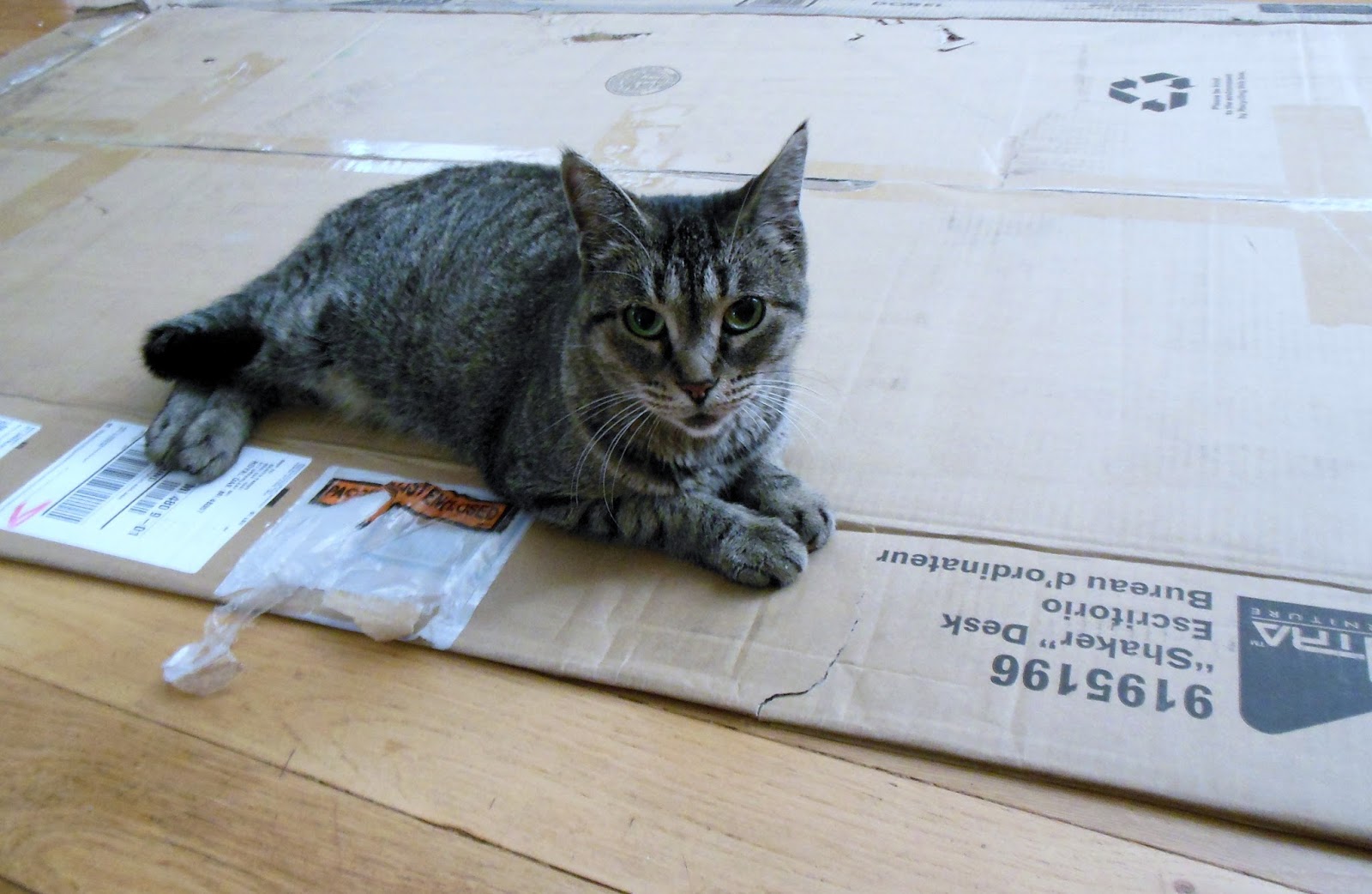
This cat is lying on a piece of a cardboard box that is on the floor. 
/ Este gato está tumbado sobre un trozo de una caja de cartón que está sobre el suelo. 

In es para sitios cerrados, que tienen límites, fronteras, paredes, volumen. Mary is in her room. / Mary está en su cuarto. Hans is in Berlin. / Hans está en Berlin.

This cat is sitting in a box. / Este gato está sentado en una caja. 

At también se puede referir a un lugar en el que alguien está realizando la actividad que define ese lugar. Por ejemplo, si estás en el teatro viendo una obra de Shakespeare, estás at the theatre. Un alumno que está en su escuela aprendiendo, está at school. Y alguien que está en su casa tumbado cómodamente en un sofá pasando de todo está definitivamente at homePero un fontanero que está en un teatro arreglando una tubería de un baño debería estar in the theatre. Esto porque podría estar en cualquier otra parte cumpliendo está función que no es la que define un teatro. Pero unos actores que están en el escenario representando a Romeo y Julieta están on stage. Y un limpiador que está barriendo el suelo del escenario estaría on the stage.

En relación con medios de transporte se utilizan on e in. Con un coche, se usa in para lo que está dentro del coche, sean objetos o personas. The boys are in the car and their suitcases are in the car too. / Los muchachos están en el coche y sus maletas lo están también. Lo mismo sucede con un taxi porque es un coche. Pero se está on a bus (bus), on a train (tren), on a plane (avión), on a ship (nave, barco) on a bicycle, on a motorcycle si alguién está montado en uno de estos medios de transporte, sobre todo si es con intención de ir a alguna parte en ellos. Pero se puede decir in a boat (barco). They are rowing to Eden in a pea green boat. / Están remando al Edén en una barca verde guisante. He is on a train to Toledo. / Está en un tren que va a Toledo. He is riding on his bike. / Está montado en su bici.  

Otro día complicaré todo esto más. Por hoy, os aconsejo que hagáis el pequeño test que viene a continuación.  

In, On, At Test:
1. There is graffiti ____that wall.
2. There are paintings by Goya ____ the Prado Museum.
3. Jane is ____ the Louvre Museum admiring the Mona Lisa.
4. Peter is ____ home watching a football game on TV.
5. Peter´s wife is ____ the cinema watching a film with their children.
6. John is having dinner ____ a Japanese restaurant.
7. Alfred is ____ a plane to Honolulu.
8. The flower shop is ____ the corner of this street.
9. Jamie is sitting _____ a bench in the park.
10. It´s early. John is still  _____ work.
11. He is ____ the airport. He went there to fetch Lisa.
12. Put that book back _____ the shelf.
13.-14. Matt has stage fright. You can push him ____ the stage, but he´ll never really be ____ stage.
15. He rode all the way to the next town _____ his bike.
16.-17. Leave the lamp you bought _____ your car and let´s have tea _____ this new teashop.
18. There was a lot of money _____ the wallet we found.
19. Who was _____ the party?
20.  We rode _____ camels.
21. Frank is waiting outside _____ a taxi. 
22. They are hiding _____ the backroom of that shop.

Answers /Respuestas:


Thursday, 29 August 2013

The dialogue of the man with the power / El diálogo del hombre del poder


We don´t know where it first came from, but we first heard it on TV, when watching a film called "The Bachelor and the Bobby-soxer. " Hollywood´s most elegant male, Cary Grant, said "You remind me of a man," and that was how it all started for us. It´s one of those catchy, nonsense things that someone says and everyone else ends up saying too. It is neverending because where it stops, it starts anew. That´s the neverending curse of the man with the power of hoodoo. Below you have the film version of it.

No sabemos si su origen es ese, pero lo escuchamos por primera vez en la tele en una película  titulada "El Soltero y la Adolescente." El hombre más elegante de Hollywood, Cary Grant, dijo eso de "me recuerdas a un hombre..." Se trata de una de esas cosas absurdas pero muy pegadizas que alguien dice y que todo el mundo acaba repitiendo por contagio de la tontería. Y no termina nunca, porque donde acaba, vuelve a emepezar. Esa es la interminable maldición del hombre del poder del hoodoo. Sí, hoodoo, en español, judú. El judú es un tipo de magia casera que mezcla elementos del vudú afroamericano y de la magia de los indios norteamericanos con las supersticiones de los campesinos europeos. La versión del diálogo del hombre del poder que recitan en la película citada es así:

You remind me of a man. / Me recuerdas a un hombre.
What man? / ¿Qué hombre?
The man with the power. / El hombre con el poder.
What power? / ¿Qué poder?
The power of hoodoo. / El poder de quién hace (el poder del judú). 
Hoodoo? / ¿Quién hace? (¿Judú?)
You do. / Tú haces. 
I do? / ¿Yo hago?
Remind me of a man. / Que recuerde a un hombre.
What man? / ¿Qué hombre? 

This works out because hoodoo and who do are pronounced the same in English. 

Esto funciona porque hoodoo y who do (quienes hacen) se dicen igual en inglés.

There is a song version you can hear in the video below. And further below you have the lyrics of this song and their meaning in Spanish. 

De todo esto posteriormente salió una canción que podéis escuchar en este video. A continuación tenéis la letra y la traducción de la misma. 


You remind of a man. / Me recuerdas a un hombre.
(What man?) / (¿Qué hombre?)
Oh, the man with the power./ Oh, el hombre con el poder.
(What power?) / (¿Qué poder?)
Oh, the power of voodoo / El poder del vudú.
(Who do?) / (¿Qué hace?)
Oh, you do, you do / Oh, tú haces, tú haces                                               
(Do Do what?) / (¿Yo hago?)
You remind of a man. / que recuerde al hombre.
(What man?) /(¿Qué hombre?)
Yeah, the man with the power. / El hombre del poder.
(What power?) /(¿Qué poder?)
Yeah, the power of voodoo / Sí, el poder del vudú.
(Who do?) / (¿Qué hace?)
Yeah, you do, you do / Sí, tú haces, tú haces...
(Do what?) / (¿Qué hago?)

Oh, we could take 'em out of this rex, / Podríamos sacarles de este embolado.
Save us from the man with the hex. / Salvadnos del hombre del maleficio.
Save us from his evil curse, / Salvadnos de su nefasta maldición.
It's gonna get bad, yeah, it's gonna get worse. / Las cosas se pondrán mal, sí, y se pondrán peor.

Uhhh, hocus pocus alakazaam, / Uy, hocus pocus, alakazam,
Save us from that evil man, / Salvadnos de ese hombre malvado.
With hairy legs and heavy feet, / Con piernas peludas y pies pesados,
He cracks up, baby, even as he creeks. / 
Se troncha incluso mientras cruje y se parte los lados. 

You remind me of a man / Me recuerdas a un hombre.
(What man?) /(¿Qué hombre?)
Yeah, the man with the power / El hombre del poder.
(What power?) / (¿Qué poder?)
Oh, the power of voodoo / Oh, el poder del vudú.
(Who do?) /(¿Qué hace?)
Yeah, you do, you do / Sí, tú haces, tú haces...
(Do what?) / (¿Qué hago?)

You remind me of a man. / Me recuerdas a un hombre
(What man?) /(¿Qué hombre?)
Yeah, the man with the power / El hombre del poder.
(What power?) / (¿Qué poder?)
Oh, the power of voodoo / Oh, el poder del vudú.
(Who do?) / (¿Qué hace?)
Yeah, you do, you do / Sí, tú haces, tú haces...
(Do what?) / (¿Qué hago?)

uh ah, voodoo / uy, ay, vudú

Save us, save us / Salvadnos, salvadnos
(Save us, save us) / (Salvadnos, salvadnos)
Save us, save us / Salvadnos, salvadnos
(Save us, save us) / (Salvadnos, salvadnos)
Save us, save us / Salvadnos / salvadnos
(Save us, save us) / (Salvadnos, salvadnos)
Save us, save us / Salvadnos, salvadnos
(Save us, save us) / (Salvadnos, salvadnos)

We can take 'em out of this rex, / Podemos sacarles de este embolado
Save us from the man with the hex, / Salvadnos del hombre del maleficio.
With bulging eyes and a bogey leg, / Con ojos saltones y una pata de demonio

Save us from the man with hex. / Salvadnos del hombre del maleficio.

Oh, save us, save us / Oh, salvadnos, salvadnos,
(Save us, save us) / (Salvadnos, salvadnos,)
Save us, save us / Salvadnos, salvadnos,
(Save us, save us) / (Salvadnos, salvadnos,)
Save us, save us / Salvadnos, salvadnos,
(Save us, save us) / (Salvadnos, salvadnos,)
Save us, save us / Salvadnos, salvadnos,
Save us from the man with hex / Salvadnos del hombre del maleficio.


We found the cool image of the man with the power that is at the head of this post in Images from the Internet.

Encontramos la imagen molona del hombre del poder que encabeza esta entrada en Imágenes de Internet. 

Labels

Advent Calendar/Calendario de adviento (25) Animal rights / Derechos de los Animales (7) Art / Arte (17) Astronomy / Astronomía (9) Australia /Australia (2) Authors (30) Birthdays / Cumpleaños (36) Carnival / Carnaval (5) Christmas / Navidad (37) Compositions / Redacciones (15) Condolences / Condolencias (7) Constitutionalism / Constitucionalismo (4) Contests / Concursos (2) Coronations/Coronaciones (1) Ecology / Ecología (3) Extracurricular Activities / Actividades Extraescolares (9) Feng Shui (8) Field Trips (1) Films / Películas (8) Games/Juegos (3) Geography / Geografía (4) Ghosts / Fantasmas (14) Grammar to Get by / Gramática para apañarse (67) Halloween / Noche de Ánimas (32) Health / Salud (3) History / Historia (43) Human Rights / Derechos Humanos (13) Inventions / Inventos (1) Ireland / Irlanda (10) Laws / Leyes (5) Legends / Leyendas (54) Listening / Escuchar (32) London / Londres (5) Maths / Matemáticas (5) Memes/Memes (2) Messages / Mensajes (8) Mini Calendar / Mini Calendario (10) Mini Mythology / Mini Mitología (82) Mini Zodiac / Mini Zodiaco (12) Mr. Eddy / El Señorito Eddy (5) Music / Música (112) Needn´t Be Lost Causes / Causas No Necesariamente Perdidas (4) News / Noticias (25) Novels (7) Nursery Rhymes / Rimas para niños (19) Obituaries / Obituarios (6) Other Animals / Otros Animales (7) People/Gente (48) Plants / Plantas (12) Poems / Poesías (101) Poets/ Poetas (51) Precious and the Air / Preciosa y el Aire (4) Recipes / Recetas (21) Recommended Reading / Lecturas Recomendadas (34) Recommended TV series / Series de televisión recomendadas (1) Saints / Santos (23) Sayings and Saws and Proverbs and Quotes and Maxims / Dichos y refranes y proverbios y citas y máximas (12) Science / Ciencias (5) Scotland / Escocia (12) Scotland /Escocia (1) Shopping and gifts / Compras y regalos (8) Short Texts to Read / Breves textos que leer (33) Songs / Canciones (127) Speaking / Hablar (17) Special Days / Días Especiales (117) Sports / Deportes (9) Story report / ficha de un cuento (25) Tales of a Minced Forest/Cuentos del Bosque Triturado (167) Toora Chronicles / Crónicas Toora (245) Trailers (11) Valentine´s Day / Día de San Valentín (11) Vocabulary / Vocabulario (39) Wales / Gales (8) Winter /Invierno (2) Writing / Escribir (16)

Blogroll